How to Defrost Fish
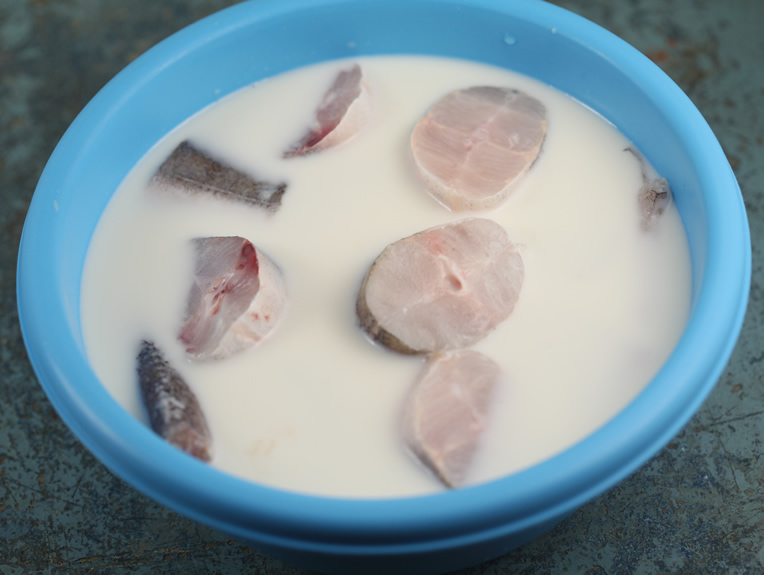
Never force-defrost frozen fish, and if it's store-bought it's safer to defrost/marinate it in milk. The advantages of frozen fish are: it's cheaper and you have access to more varieties of fish, especially if you don't live near the sea.
- Tips for when you buy frozen fish: look in the bags, the pieces of fish (whether whole, fillets or rounds) should be separate, not stuck together; also they should have no traces of ice on or between them (none at all!!!); they should not be deformed, bent; all these are signs that the fish has been defrosted and will become mushy when you cook it.
- Never force-defrost frozen fish (in warm water or microwave...)! The meat will become soft or "spongy"... anyway force-defrosted fish is no good for anything. Defrost it in the refrigerator (it will take longer, but if you put it in the evening, it's defrosted by morning).
* if the fish defrosted this way still has a spongy consistency after cooking it means it was defrosted before you bought it, in the store or during transport between stores and it would be better not to consume it; it seems you ignored the tips from point 1!!! 😋 - Defrosting fish in milk. This technique is valid if you have whole frozen fish, bought from the store. Put it frozen in milk and let it thaw, in the refrigerator of course. This way it will taste like fresh fish, not like one from the freezer, caught who knows when and passed through supermarkets.... the milk takes away the strong fish smell, which appears when it's not fresh.
This can also be done for fish fillets or rounds or if the fish is from the ice counter, you never know how long it's been there! For this, the fillets/rounds are left to defrost in the refrigerator. Before cooking them, leave them covered with milk for 10 minutes, then drain. Dry well with kitchen towels and they are ready to cook.
Enjoy your fish!