Ensaimada (Spanish Croissant)
Dough Desserts Spanish Breakfast
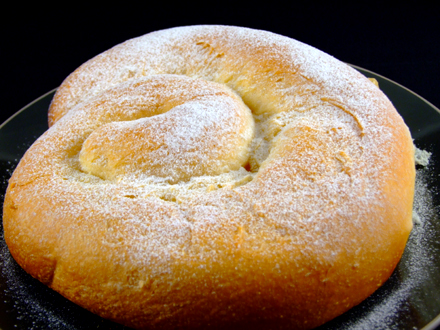
Today I'm lacking inspiration, I could only find this name for the Spanish dessert typical of the island of Mallorca, called ensaimada. I hope the Spanish won't be upset that I gave it a French-sounding name, but the dough resembles a good croissant - airy and fluffy inside with a crispy top. At least this way you can get an idea of what you'll get if you try this recipe, because honestly, the word "ensaimada" didn't mean anything to me when I first heard it.
I thought I would make 3 normal-sized croissants and take them to work, but overnight I woke up to find huge croissants risen in the pan. Three monsters I didn't know what to do with, considering there are only two of us, so I made my brother happy with one, and the second will surely be claimed by this evening.
Being my first attempt, I went with the simple version to see how the dough behaves. But they can easily be filled with chocolate, cheese with raisins, or any other cream you can think of. If you want to fill them, I'd say make them smaller, maybe divide the dough into 6. I can't wait to make the filled version. Plain like this, they go well with breakfast and a glass of milk, but filled... they'll be a delight at any time of day.
Ingredients
150 g sugar
160 ml warm milk
2 eggs
6 tablespoons oil (preferably olive oil)
1 packet dry yeast (7 g)
510 g all-purpose flour
a pinch of salt
80 g lard at room temperature (DO NOT substitute with butter or margarine!)
vanilla powdered sugar for decorating
1 tablespoon oil for greasing the pan and work surface
Yield: 3 ensaimadas with 20 cm diameter
How to prepare ensaimada (spanish croissant)
- Put all ingredients (except the last 3) in the bread machine in the order listed. Set to the "dough" program which includes kneading and rising.
If you don't have a bread machine, dissolve the yeast in milk. Make a well in the center of the flour and add all ingredients in the middle (except the last 3) and knead until you get an elastic, non-sticky dough. Let it rise in a covered bowl in a warm place for about 1 hour. - Divide the dough into 3 equal pieces.
- On the work surface, place parchment paper and grease it with a little oil using a silicone brush (or a pastry brush).
- Roll each piece into a thin sheet, approximately 35 cm x 25 cm.
- Take the lard with your fingers and spread it well over the sheet (the lard shouldn't be in a thick layer, just like greasing a pan). Fold the dough widthwise. Spread lard on top again and fold one more time widthwise.
- Roll the dough into as thin a sheet as you can - my sheet was approximately 50 cm x 35 cm, slightly transparent. When you start stretching it, use your hands, not a rolling pin, because the dough is slippery from the lard. When the dough becomes more "stable," continue stretching with the rolling pin.
- Roll up the thin sheet along the long side. Coil the resulting roll into a snail shape.
- Line the baking sheet with parchment paper. Lightly grease the paper with oil using a silicone brush. Place the "snails" on the pan, spaced apart from each other.
- Put the pan in the oven (not turned on) and let rise for 12 hours (I left them overnight). The "snails" will rise a lot.
- The next day, turn on the oven to 170°C and bake for about 35 minutes until the croissants are golden.
- Let cool and dust with vanilla powdered sugar. Serve in the morning with a glass of milk.
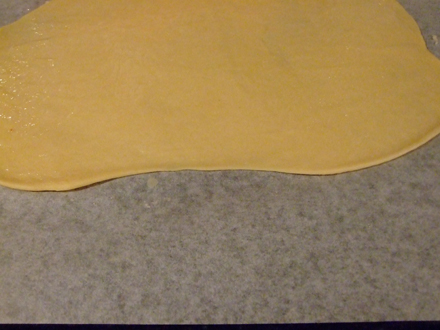
Sheet spread with lard
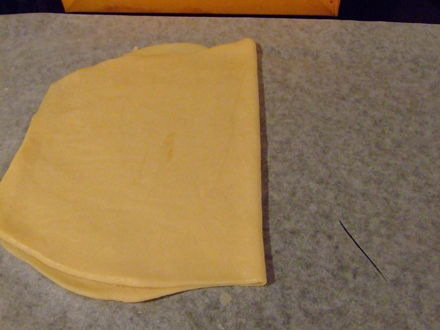
Fold (step 1)
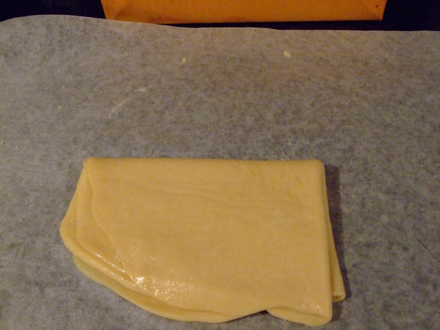
Fold (step 2)
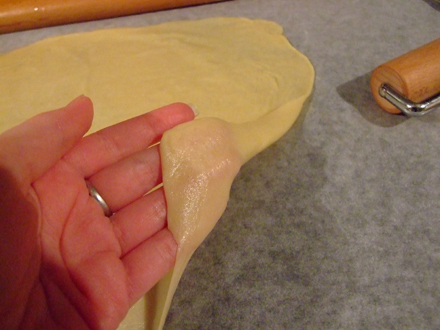
Thin sheet
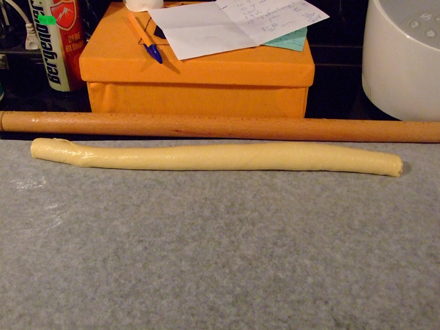
Roll tightly
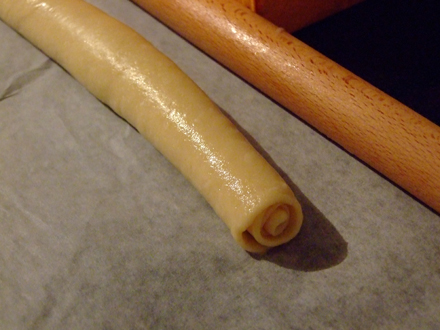
Roll
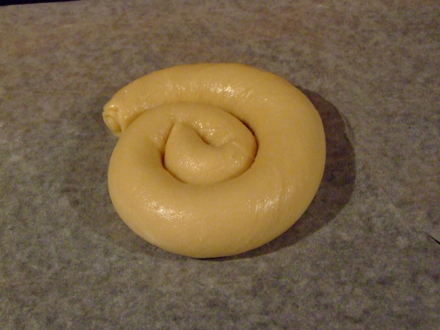
Shape into a snail
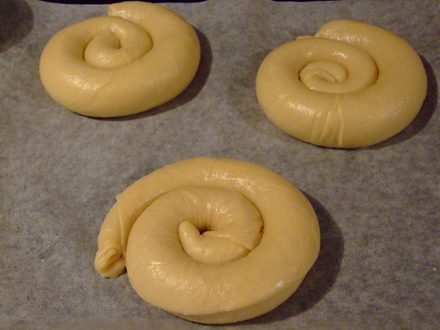
Ensaimada in the pan
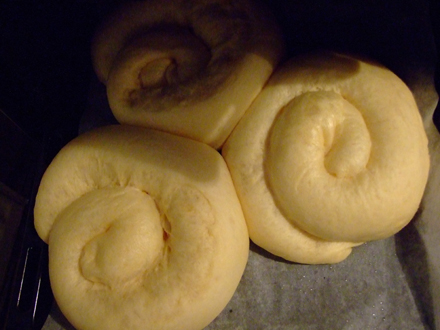
After 12 hours
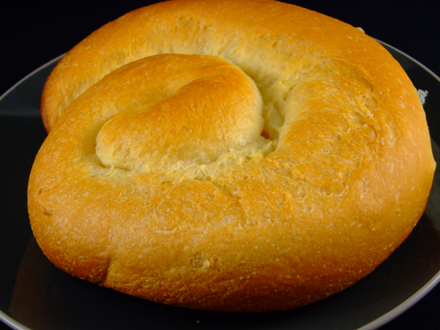
Baked
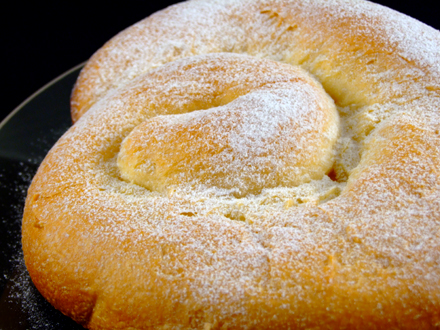
Dust with sugar
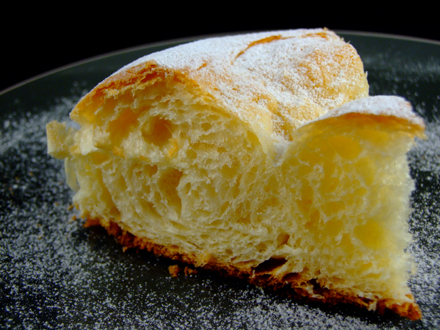
Cross section