Feta Cheese Scones
Appetizers Dough Hungarian Snacks
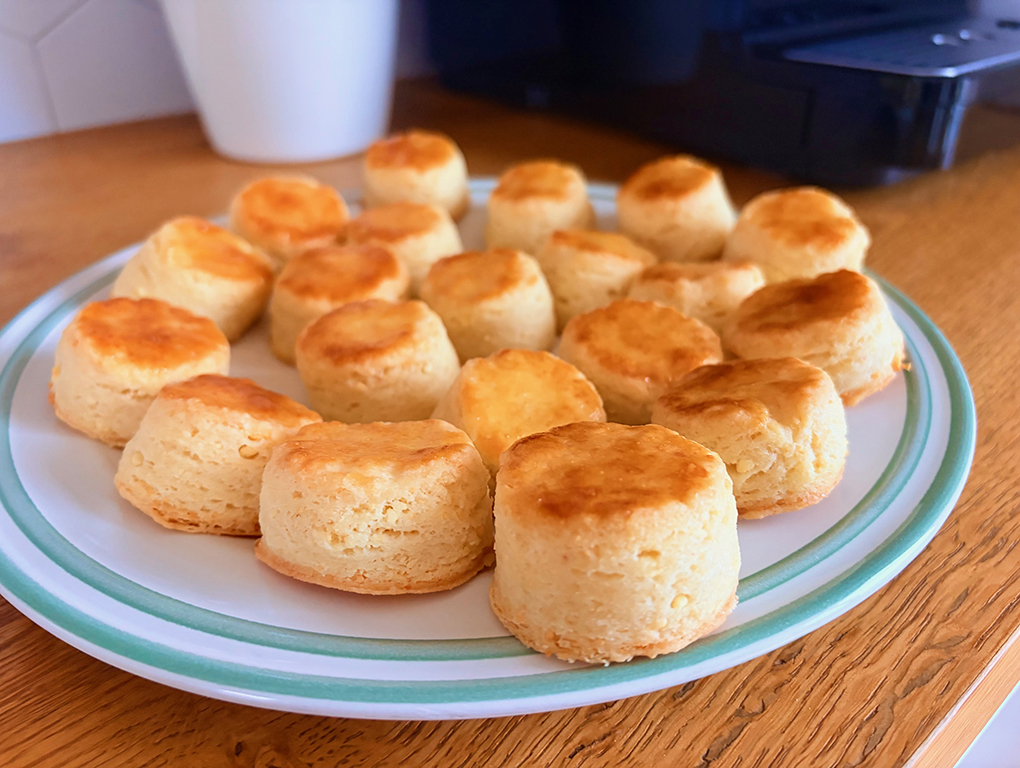
A yeast-free version of scones, using only baking powder. This is a somewhat "temperamental" dough that doesn't forgive neglect. But that's exactly what makes it so interesting! The scones become more tender, more crumbly, with an intense butter and feta flavor — it's a small test of technique and patience, but with a reward at the end: an entire tray of golden, beautifully risen savory treats.
Ingredients
250g all-purpose flour (type 000 I used)
250g cold butter (straight from the fridge)
250g feta cheese (the crumbly kind)
1 teaspoon baking powder
1 teaspoon salt
1 egg
1 teaspoon milk
Servings: 30 (4.5 cm diameter)
Calories: 119 cal / piece; 3565 cal total
How to prepare feta cheese scones
- Mix the flour with salt and baking powder. Place in a food processor. Add the butter cut into cubes and pulse briefly, just a few pulses, until the mixture resembles breadcrumbs.
- Transfer to a large bowl. Add the feta cheese, crumbled very well with a fork. Mix everything together.
- Add the egg white beaten with a fork and start kneading the dough. At first, just squeeze the dough in your hand until it starts to stick together. The butter will warm slightly from your hands and the dough will become slightly sticky, enough for everything to adhere. When you have large pieces of dough stuck together, you can gently knead everything until you have a single homogeneous piece. At this point, the dough should feel only slightly sticky and easy to shape. If it's excessively sticky (perhaps the kitchen was very warm), put the dough in the fridge for 30 minutes to cool the butter again.
- Place a large piece of parchment paper on your work surface and sprinkle it generously with flour. Place the dough in the center and try to shape it into a rectangle with your hands.
- Start rolling out the dough gently, at first just with light pressing motions about 1 cm apart. Then start rolling normally, with back and forth movements, trying to apply even pressure everywhere (don't press harder on the edges, for example). The sheet should have an even thickness throughout as you roll. Don't rush, work slowly, and if the edges crack a little, that's okay.
- Roll the sheet to about 1/2 cm thickness. Fold the dough in thirds toward the center (first one end to the center, then the opposite side over it). Turn the dough 90 degrees and fold in thirds toward the center again.
- Now put the dough in the fridge for 15 minutes. Meanwhile, preheat the oven to 180C.
- Take the dough out again onto the work surface and this time roll it to a thickness of 1.5-2cm, the same way, slowly, at first just with pressing motions of the rolling pin. The pressure should be even on the sheet now too, this will help the scones rise well and evenly in the oven.
- Cut out rounds with a 3.5-4.5 cm round cutter. Place the rounds apart from each other on a baking tray lined with parchment paper. Alternatively, if you don't have a round cutter, you can cut the dough into squares of about 2 cm.
* the remaining dough can be rolled out again to use it all, just repeat steps 4-7 while the first batch bakes - Beat the remaining egg yolk with milk and then brush the tops of the scones with a pastry brush. Be careful not to brush the sides, or let it drip down the sides, as it will affect the rise. If desired, you can sprinkle the scones with coarse salt or caraway seeds.
- Bake for 25-30 minutes, until nicely golden on top and visibly golden at the base too.
- Let cool completely before serving (at least 30 minutes), they will be slightly soft in the center while warm. They keep well in a container with a lid.
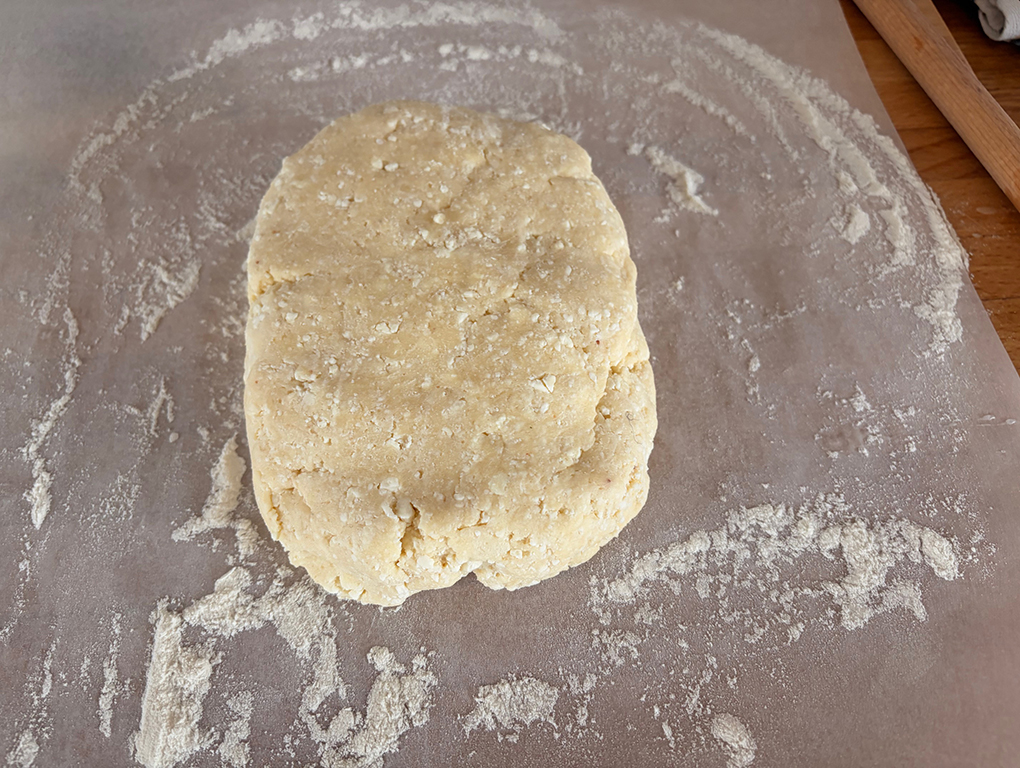
The dough on the work surface

Initially we roll out the dough with frequent pressing
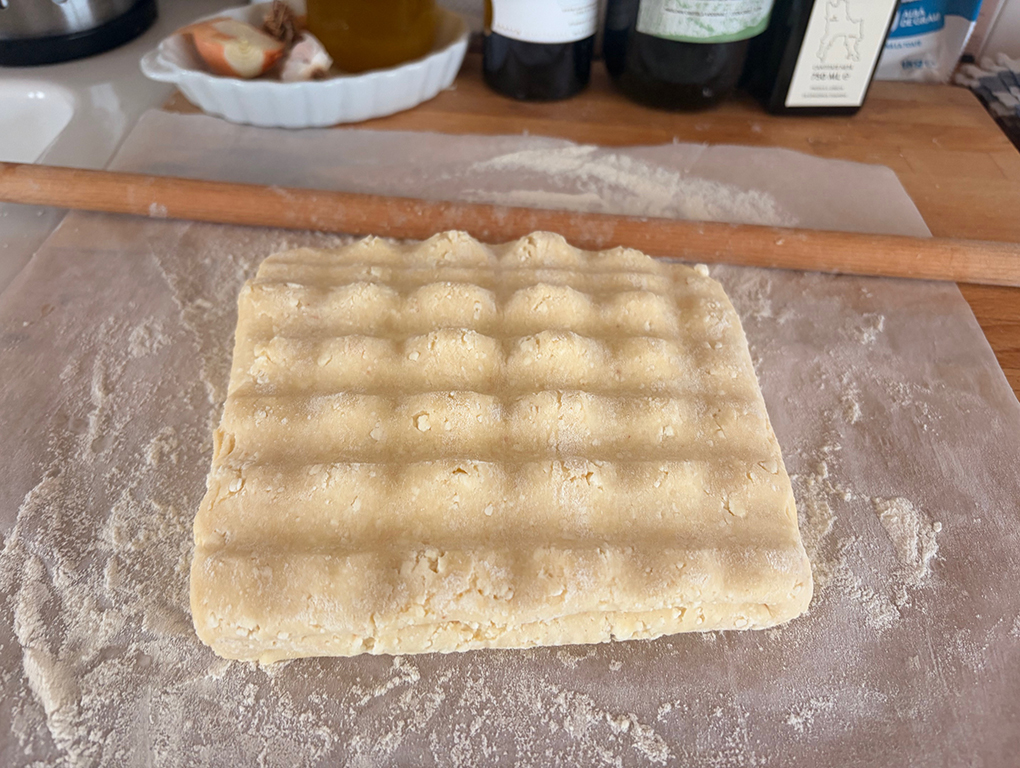
We also press from the opposite direction
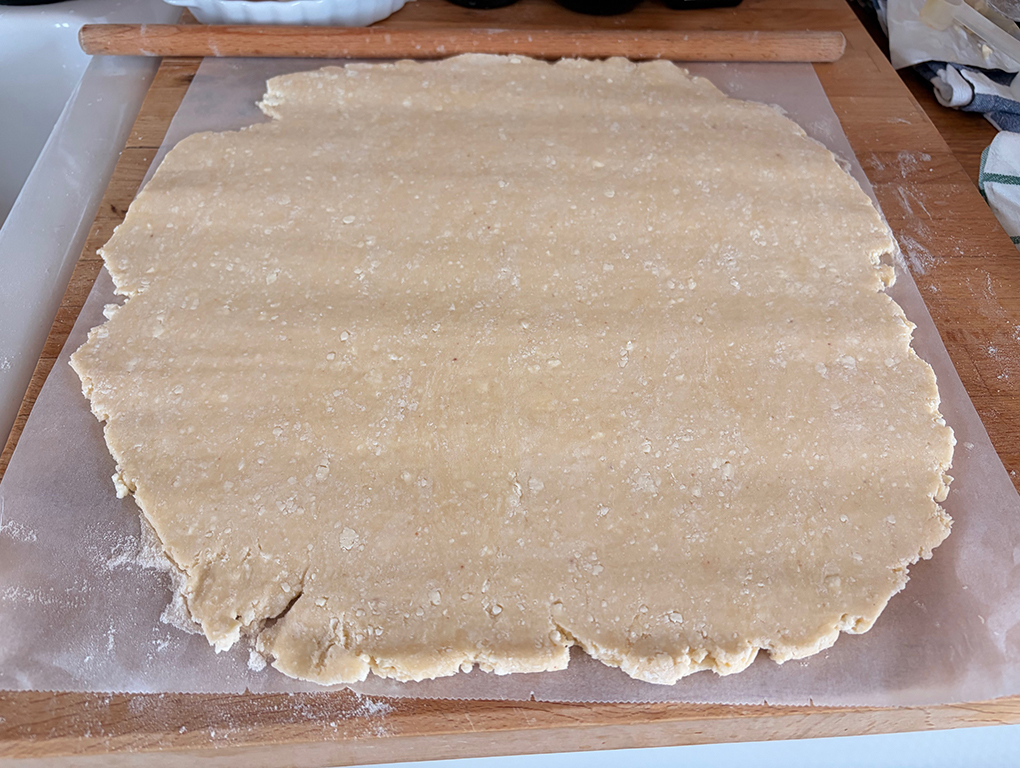
The dough rolled out to 0.5 cm
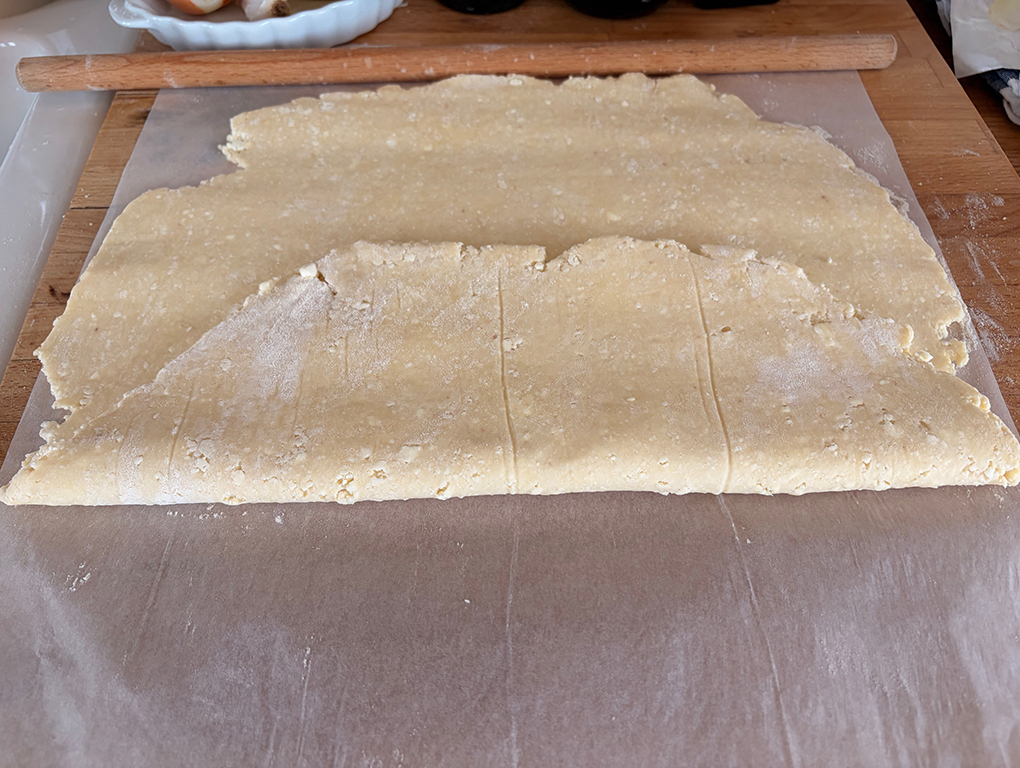
We fold half towards the center
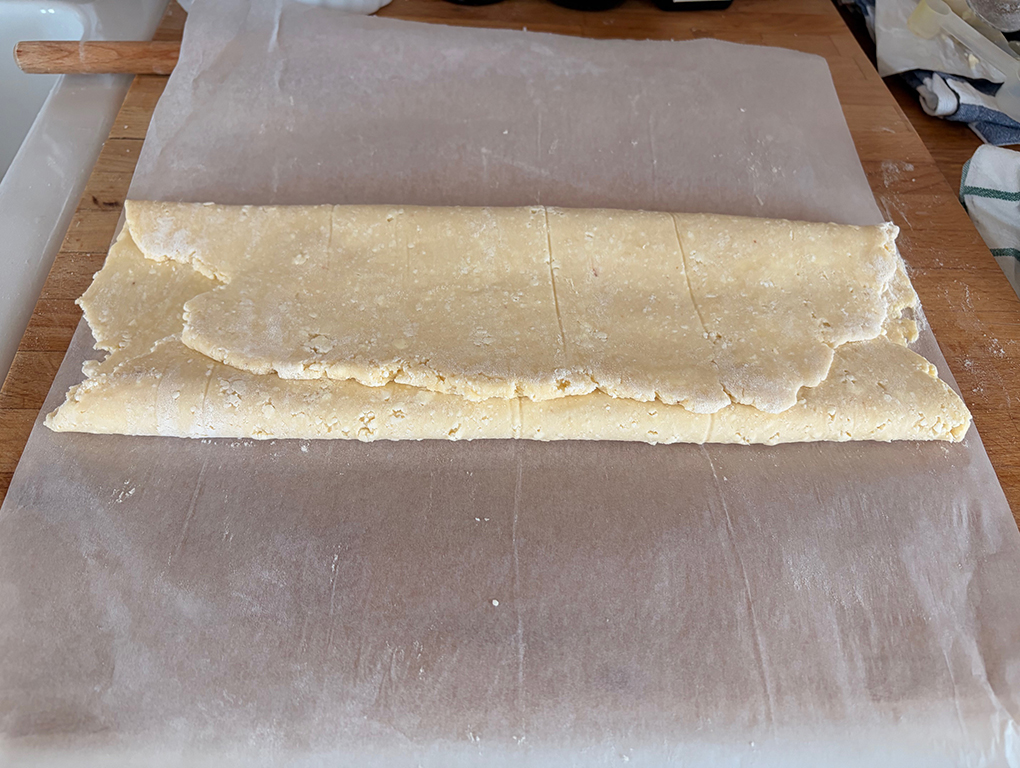
Then from the opposite side

We repeat at 90 degrees

We get a thick piece again
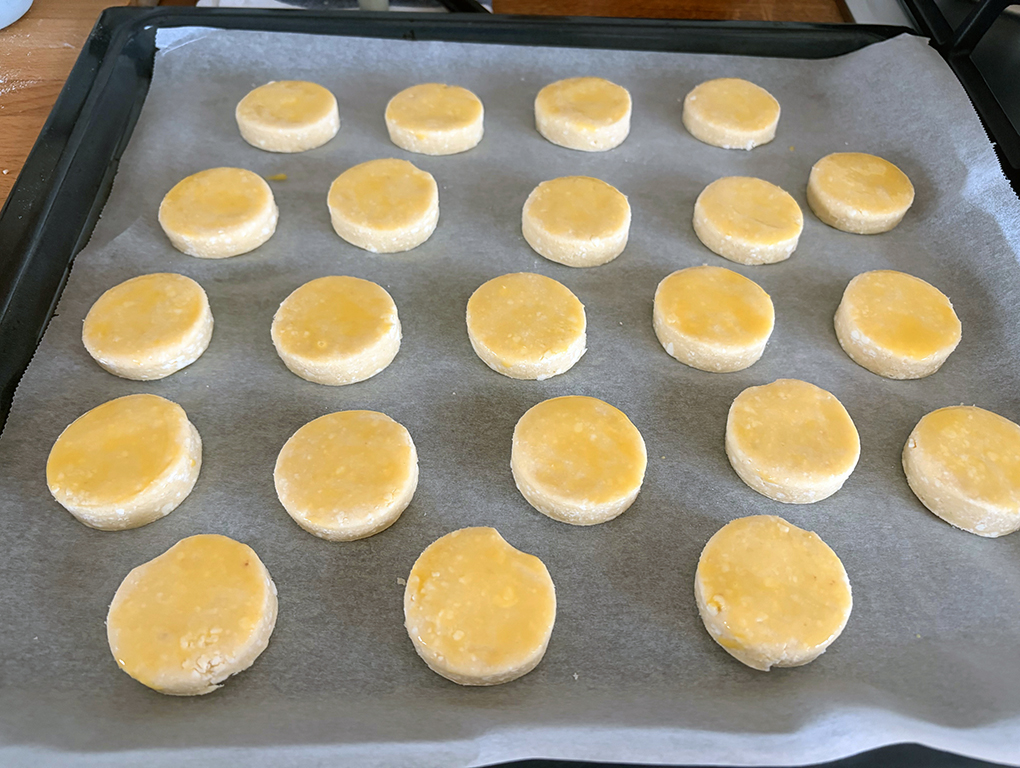
The brushed discs in the pan