Sheet Pan Bread
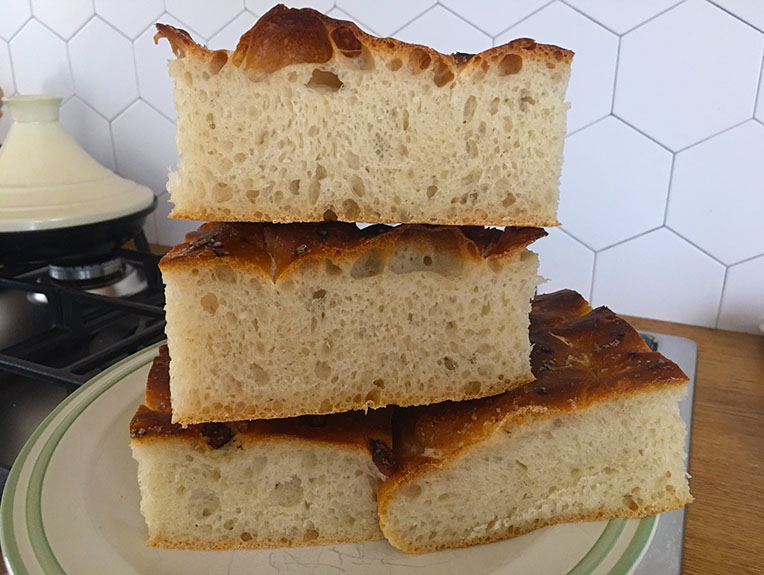
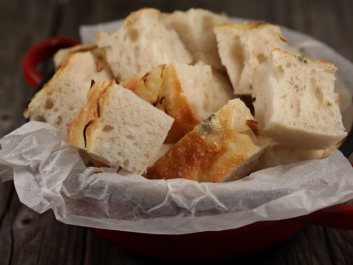
Bread made with patience. It can be made plain or with various fillings, like a focaccia. The crust is crispy, while the inside is elastic and very soft.
This is weekend bread, where the actual working time is minimal—it just takes time to rise. If you start the dough right now, by tomorrow noon you'll have warm bread that you'll be very pleased with.
Ingredients
Dough
1 kg all-purpose flour (type 550/BL55)
750 ml water
30 ml olive oil
1 heaping tablespoon salt
1 teaspoon sugar
1 packet dry yeast (packet recommended for 500 g flour; 7-10 g)
olive oil for shaping
taleggio cheese (or another soft cheese; or goat cheese, blue cheese; optional)
pancetta cubes (optional)
coarse salt
How to prepare sheet pan bread
- In a cup, dissolve the sugar and yeast in 250 ml warm water. Cover with a small plate and leave in a warm place (near a lit stove burner or near a radiator) until you see foam on top, a sign that the yeast is active.
- Put the yeast mixture in a stand mixer (or bread machine). Add the remaining 500 ml of warm water. Add the flour mixed with salt.
- Knead for 5 minutes with the mixer (or start the bread machine on the kneading program). Then add the oil and knead for another 5 minutes in the mixer. In the bread machine, add the oil in the last 5 minutes of the kneading program and let the program finish.
The result will be a super elastic but also quite sticky dough. Oil your hands when handling it. - Oil a large bowl and place the dough in it. Fold the dough directly in the bowl by pulling up from one side. Repeat 4 folds, rotating the bowl.
- Cover the bowl with plastic wrap that comes in direct contact with the dough, otherwise it will form a dry crust.
- Let the dough rise in the refrigerator for 20-24 hours. For example, prepare it at noon and take it out of the refrigerator the next morning.
- The next day, remove the bowl with dough from the refrigerator and let it sit at room temperature for one hour.
- Line the deep baking sheet of your oven with parchment paper (you can also use a slightly smaller tray, but not much smaller) and generously oil the parchment paper and the edges of the tray with olive oil.
- Turn the dough out into the center of the tray, trying to deflate it as little as possible. Put the tray in a large plastic bag and leave the dough in a warm place (25-30 degrees) for another hour. After this time, the dough won't be as cold and can be shaped more easily.
- Oil your hands and press the dough with your fingers as if massaging it, spreading it in the tray as evenly as possible. Put the tray back in the bag and let rise for another hour.
- Check that the dough has risen well, with many air bubbles on the surface. If not, let it rise for another half hour.
- When the dough looks good, if desired, add cubes of cheese and pancetta here and there and press the pieces lightly into the dough. Don't cut the pancetta too small—I made this mistake and they became crispy bits. Similarly, the cheese should be larger cubes. I added cheese and pancetta to only half the dough, leaving the rest plain, sprinkled only with coarse salt. You can make the bread plain, without any filling.
- Put the tray back in the bag and leave until the oven heats up.
- Bake the bread at 220°C (425°F) (top and bottom heat) for 35-40 minutes.
- Remove from the oven, pull the bread from the tray using the parchment paper underneath, and cover with a towel. Let it cool. I cut it into 6 large pieces and store them in zip-lock bags. This way it keeps very well for a week—stays soft and tasty, doesn't dry out or go sour.
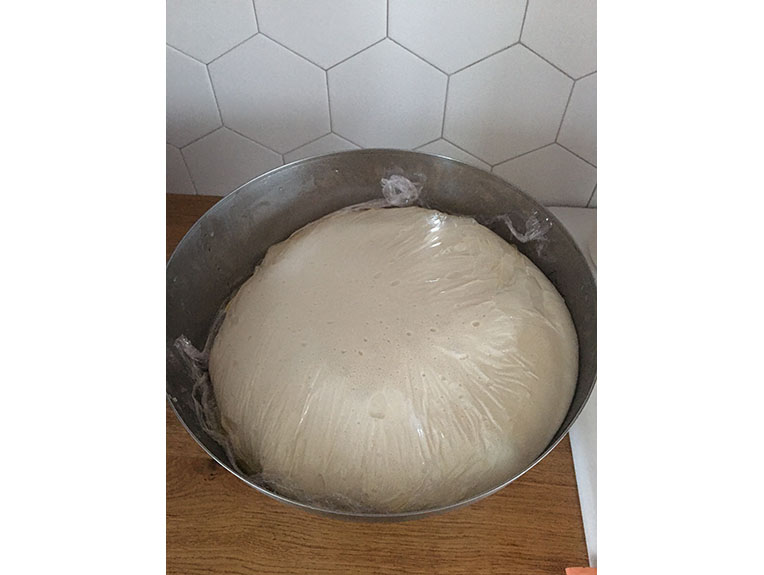
The dough taken out of the refrigerator
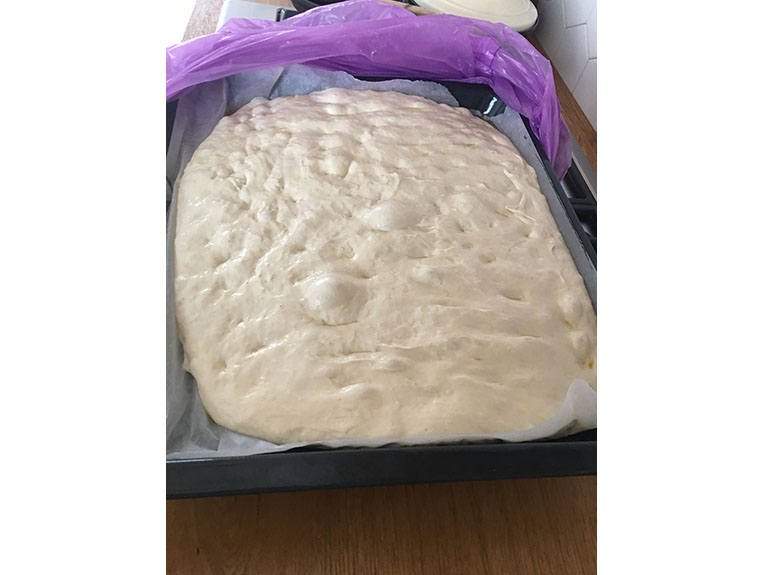
The dough after 1 hour in the pan
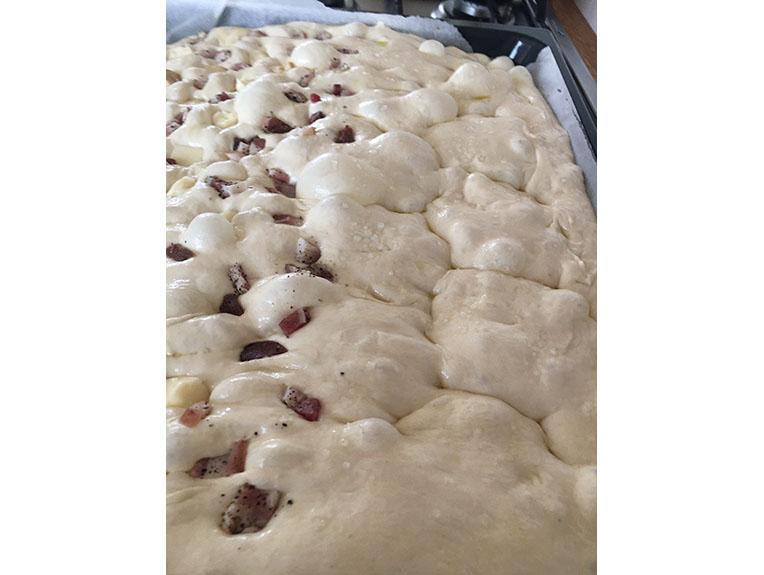
The dough after 2 hours in the pan (half filled)
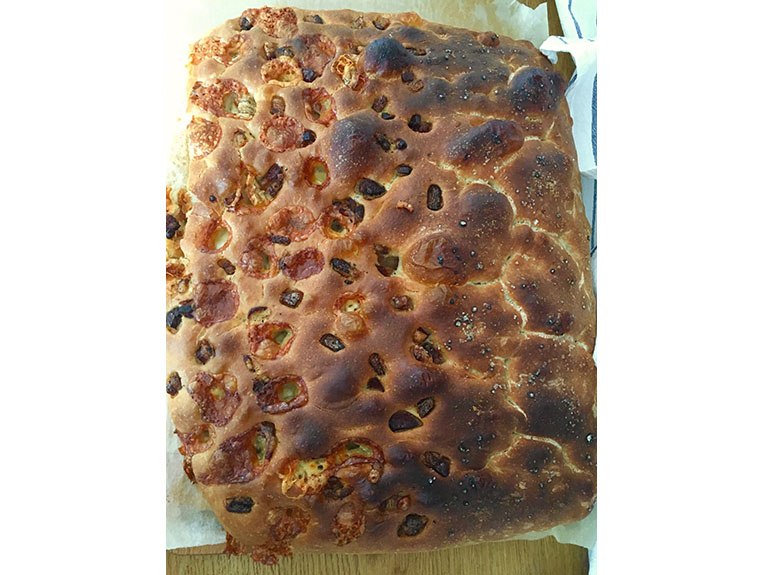
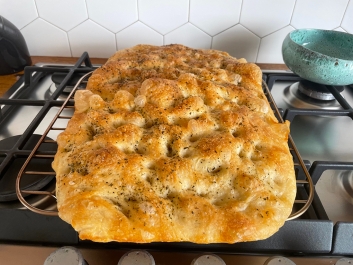
The baked bread