


Chocolate Macarons
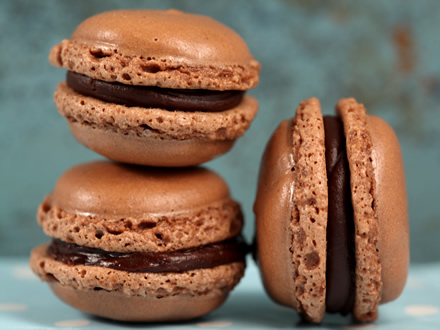
Too many myths have been created around these elegant and delicate French cookies. Egg whites aged for 3 days and 3 nights, almond flour dried in the oven, store-bought vs homemade powdered sugar, macarons left to dry on the baking sheet for an hour before baking... I've heard them all and tried them all. I'm not superstitious at all, but when it came to macarons I believed everything. I studied these techniques for years but still didn't start making macarons. I decided to go all the way to Paris, to the Lenôtre pastry school, to take a real course where they would teach me all the voodoo incantations I imagined were needed to make proper macarons.
There, all the myths were debunked in the 4-hour course. None of the above was confirmed. The recipe was simple and clear. The only thing that contains a shred of truth is drying the cookies for 20 minutes before baking, which is true only for macarons made with Italian meringue, but not with the French one we'll use now. The French technique has the advantage of resulting in lighter-textured macarons that aren't as sweet.
The big conclusion: I need to get a different oven, I can't live with an oven that doesn't know how to bake macarons 😉
Ingredients
250g almond flour (ground almonds)
450g powdered sugar (store-bought)
20g cocoa powder
200g egg whites (from 6 medium eggs; at room temperature)
50g granulated sugar
5 drops red liquid food coloring or a pinch of red powder coloring (optional, I didn't use any coloring in this batch)
Chocolate Ganache
220ml heavy whipping cream
20g Earl Grey tea
250g dark chocolate (50% cocoa)
50g butter (unsalted)
Pieces: approximately 45-55
How to prepare chocolate macarons
- Put the almond flour, powdered sugar and cocoa in a food processor. Mix at medium speed for 1-1.5 minutes (depending on the power of your processor). The result should be a very fine mixture, almost like flour.
- Place parchment paper on the work surface and sift this mixture onto it using a fine sieve. Almost all the mixture should pass through the sieve (minus 2-3 tablespoons). If more remains, it means you didn't mix it enough in step 1.
- In a clean bowl, degreased with a lemon slice and dried well, put the egg whites. Beat with an electric mixer (or in a stand mixer with whisk attachment), at first at medium speed. When you get a fairly firm white foam (but it still doesn't hold well on the whisk), start adding the granulated sugar, one teaspoon at a time, placed at the edge of the bowl. Increase the mixer speed when adding sugar. Continue mixing until you get a super firm, glossy white foam that holds on the whisk. Finally, just before stopping the mixer, you can add the coloring if desired. This serves to intensify the color, the macarons will be brownish-red. I didn't use coloring in this batch, what you see is the natural color from the cocoa.
- Add the sifted mixture in 3 batches. Add less in the first batch and then you can increase the amount. Mix with a wide spatula. This step is called macaronage. The mixing movement should be: swirl once around the edge of the bowl and then pass the spatula through the center. Repeat this movement until you get a mixture that has the consistency of thick, glossy lava that flows slowly from the spatula. After the mixture becomes somewhat homogeneous, do the spatula test every 5 or so folds, because if you mix too little and it doesn't flow it's not good, and if you mix too much and it becomes too fluid it's also not good, they will flatten when piped.
- Put half of the mixture in a piping bag with a simple 7-8 mm tip (don't put more in one bag, the mixture will warm up from your hand; either pipe in two batches using the same bag, or use two bags). Be careful not to leave air pockets when filling.
- Put parchment paper on the baking tray. Pipe small discs at a distance from each other. Hold the piping bag at a 45-degree angle to the tray and don't move it while piping. Then quickly lift the bag, and if a peak forms it's ok, it will settle in the next 20 seconds. If the peaks don't settle after this time, it means you did the macaronage too little, a few more folds were needed.
The rest of the batter is piped onto pieces of parchment paper the size of the tray. Even if they sit outside while you bake them one at a time, they won't "spoil". After baking one batch, just slide the parchment with the next batch onto the tray and put it in the oven. - Bake the cookies, one tray at a time, at 150°C for 18-20 minutes (depends on the amount piped; larger macarons bake 2 minutes longer; I prefer to pipe less batter to get smaller macarons, they bake nicer and look more elegant).
* experiment a bit with temperature, as ovens are different and 10°C can make a difference. You get about 6 trays of macarons to bake, you have time to adjust the temperature to get them perfect. - Remove the tray from the oven and gently slide the paper with macarons aside. You'll use the empty tray to bake the next batch. Let the baked macarons cool completely on the parchment paper, then they can be removed. If some batter remains on the paper when removing, it means you didn't bake them enough, they needed 1-2 more minutes. Perfectly baked macarons come off the paper without leaving traces.
- While baking all the trays, you have time to prepare the chocolate ganache: heat the cream over low heat. Add the tea, cover the pot and let it infuse for 5 minutes (no more, otherwise the cream may become bitter). Strain the cream and press with the back of a spoon to extract all the liquid from the tea. Put the cream back on heat and warm it a bit more. Then add the chocolate broken into small pieces and the cubed butter. Stir with a spatula in the center, making figure-8s until the mixture is smooth and all the chocolate and butter are melted. You will get a soft cream that you'll refrigerate for 35-45 minutes, until firm enough to hold on a spoon.
- Put the ganache in a piping bag. Place half of the macarons flat side up. Pipe ganache on each. Then cover with another macaron (look for a macaron of the same size, especially at the beginning when you might not pipe them all equally). Be sure to move the two pieces a bit when sandwiching them, so the filling covers the entire interior.
- They can be eaten the same day, but it's recommended to let them mature in the refrigerator for a day. Place the macarons in a container with a lid and refrigerate until the next day. For serving, take them out 1 hour before to return to room temperature.
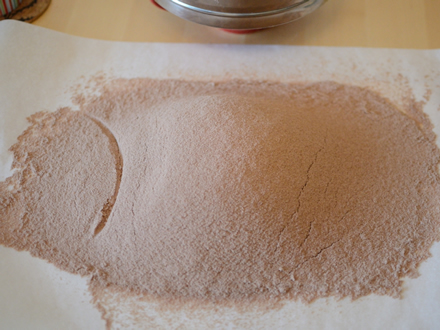
Sifting
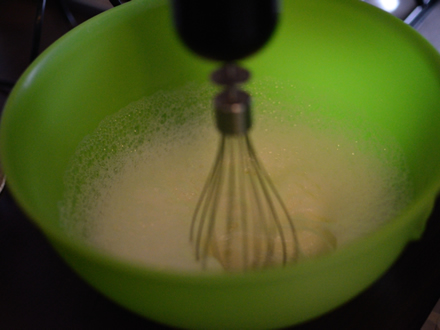
Starting to beat the egg whites
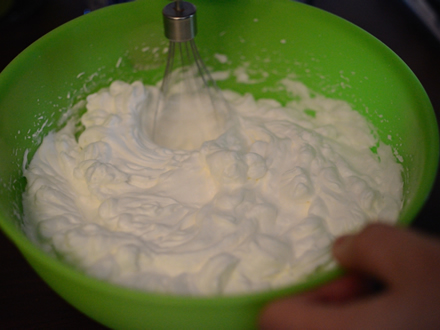
Until the foam looks like this
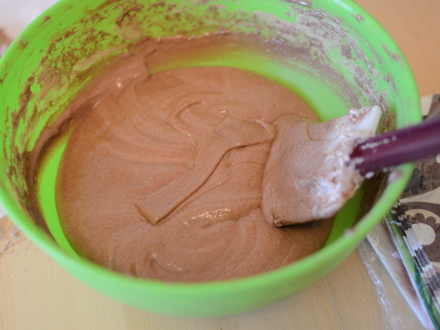
The mixture like glossy lava
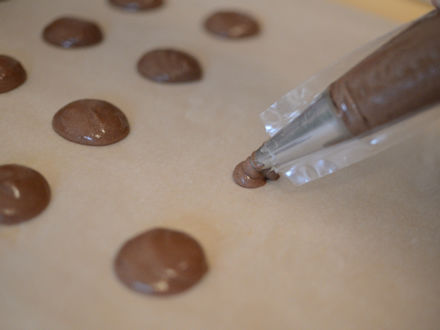
The piping bag position
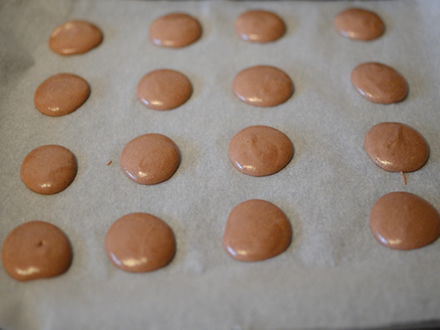
Macarons piped on parchment paper
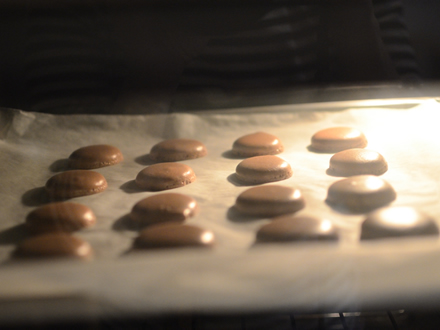
Macarons in the oven, halfway through baking
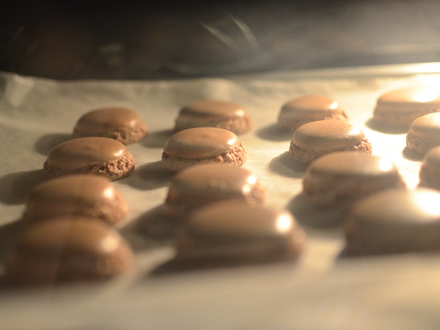
Macarons in the oven, near the end
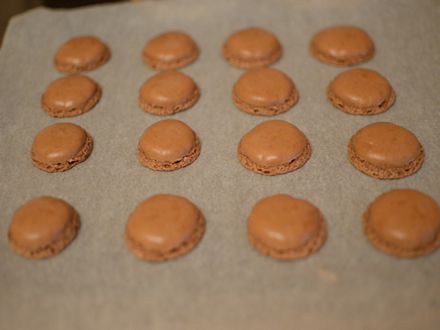
Macarons cooling on the parchment paper
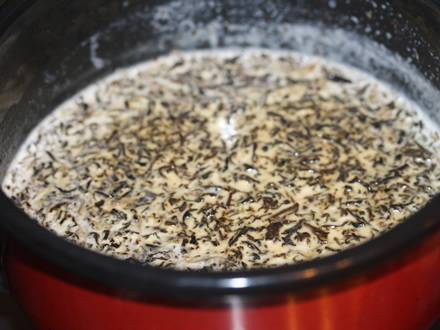
Cream infused with Earl Grey tea
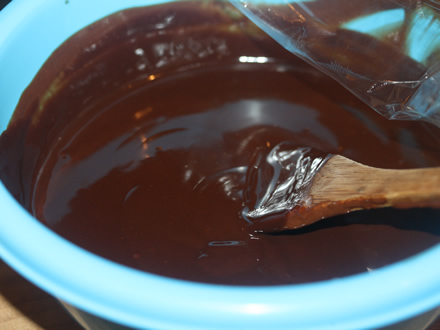
Ganache is ready
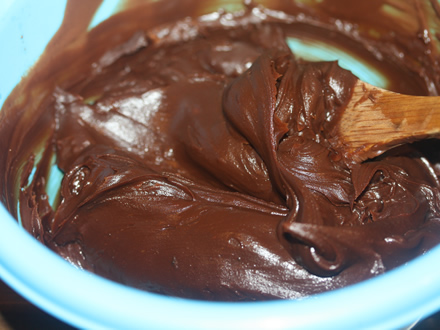
Ganache after refrigeration
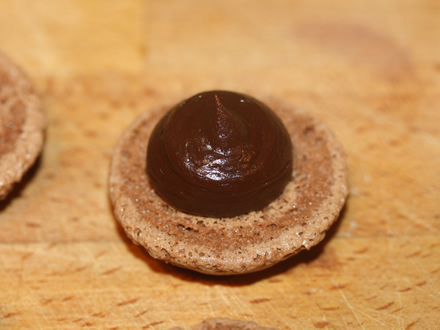
Piping ganache on macaron
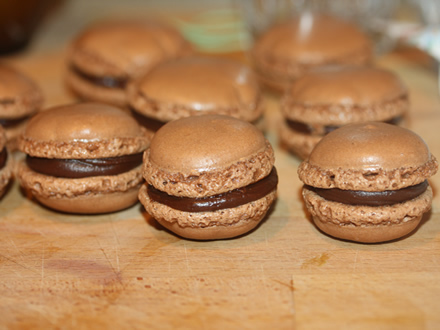
Macarons sandwiched with ganache
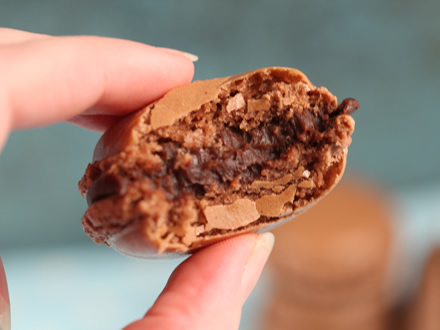
Cross section