Cocoa Powder Guide
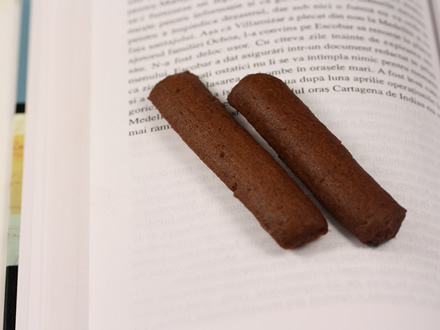
The holidays are approaching, I'll be baking intensively, so I checked my cocoa stock because I want my desserts to be successful in both taste and color. A quality cocoa makes all the difference when it comes to the color and taste of desserts. A quality cocoa can compete with desserts made with chocolate, and honestly, sometimes I even prefer those made with cocoa. For example, Brownie Cookies are wonderful, and their taste depends 100% on the cocoa used.
When I started experimenting with sweets, I naturally turned to my mother's recipes. They were classic recipes whose taste I was used to and I wanted mine to turn out exactly like hers. The first problem appeared with cocoa desserts. They came out unpleasantly dark and with too intense a taste. Logically, I realized I needed to reduce the cocoa and the desserts started turning out better. Some more time passed before I asked myself where that discrepancy came from. I think my first impulse was to think "well, during the communist era who knows what cocoa was available here...". I was close but I wanted a more scientific explanation so I studied this topic a bit. I found out they used one with reduced fat content. But now I use alkalinized cocoa with high fat content.
After understanding some of the most important properties of cocoa powder, how the quality of beans, acidity and fat content influence desserts, I started buying it consciously.
I'll briefly write what I've learned and hope it helps others too.
How cocoa powder is obtained
Cocoa beans are dried, roasted, ground and pressed to extract some of the cocoa butter (the one used to make chocolate). What remains after pressing is finely ground and that's the cocoa powder we use for desserts. The cocoa beans used obviously influence quality but also color nuances (some darker, some more brown, others reddish).
Types of cocoa powder
- Natural cocoa: the cocoa powder mentioned above is simply packaged. It has a lighter color and a strong but more raw aroma. It has high acidity and that's important to remember.
- Alkalinized (Dutch-processed) cocoa: the cocoa powder mentioned above is treated to balance its pH (acidity). Alkalinization aims to increase water solubility and intensify the aroma. Compared to natural cocoa, it has a darker color and a more pleasant, more balanced taste.
Fat content
Besides the quality of beans and processing method, the fat content in the powder is also very important. Fat content affects the color of the powder (as seen in the package) but also the color it gives to the final product. If a dessert comes out too pale or too intensely colored, the "suspect" should be looked for on the package. Fat content is listed on the package. The higher the fat content, the more intense the color will be. Therefore, depending on the desired effect, fat content must be carefully chosen (low 10% or high over 20%).
Which cocoa powder do we use?
Generally in home use, alkalinized cocoa is used because it's more stable, gives a more intense color to desserts and a finer taste.
- If I have a recipe with baking powder as the leavening agent (it may also contain baking soda, but baking powder should predominate) then I know I can use any cocoa (either natural or alkalinized), but alkalinized is preferred because it's more stable.
- If I prepare hot chocolate or cocoa puddings, I go with alkalinized cocoa again, because natural cocoa added to hot milk increases the risk of milk/cream curdling.
- However, there are some cases when natural cocoa is preferred. For recipes with only baking soda as leavening agent and no other acid (lemon juice, buttermilk etc), natural cocoa is preferable. Because its high acidity activates baking soda. Alkalinized cocoa wouldn't manage this and the desserts wouldn't rise at all.
Also for cake frostings (butter-based ones) natural cocoa is preferred for its more natural taste.
- If I want to adapt an old recipe from my mother that calls for natural cocoa and baking soda, I use alkalinized cocoa and replace the baking soda with double the amount of baking powder.
- As for fat content, generally prefer cocoa with higher fat content because it gives a fabulous color. If I make brownies, cakes or cocoa cookies I always choose a cocoa with high fat content. However, there are situations when low-fat cocoa is necessary: when adding cocoa to beaten egg foam (for mousses, meringue); too much fat would cause the foam to collapse.
What cocoa I use
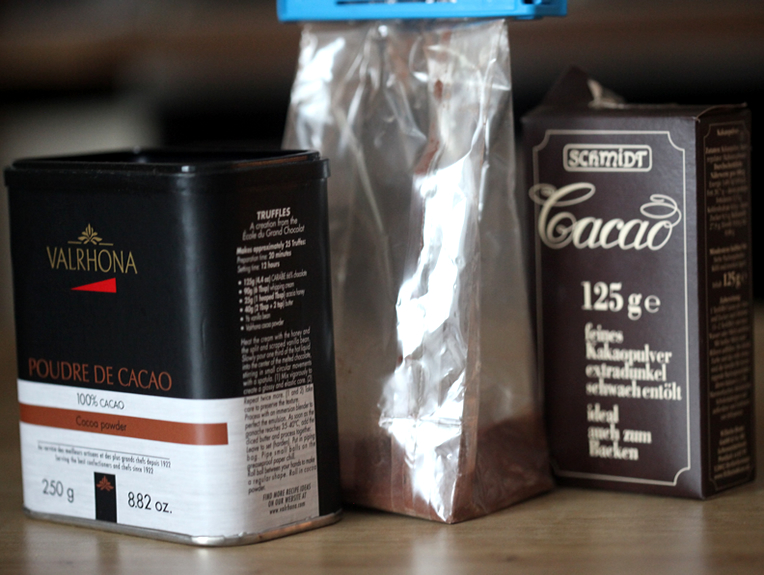
I only have processed cocoa with high fat content (over 20%) at home because it suits the desserts I usually prepare. To find out if I like a new cocoa I just smell it directly from the bag and I know if it's good or not. The smell should be sweet and chocolatey. If I sense other pleasant smells besides that, even better. For example when I smell Valrhona cocoa I clearly sense a slight smoky smell that captivates me instantly.
My preferred brands in order:
- Valrhona (21% fat) - I rarely find it, but I buy it whenever I encounter it in my travels; if you like its aroma but find it too "dark", you can combine it with other alkalinized cocoa (ratio: 2:1 or 3:1)
- Callebaut (22-24% fat) - we used to buy it in bulk from a store in Cluj, which has since closed 😢 now I have to order it online; I've been using it in desserts for 2 years and I'm very satisfied
- Schmidt (21% fat) - the best cocoa I've found so far in our supermarkets; I turn to it when I don't have the brands above