Polenta
Lacto-Ovo Vegetarian Recipes Italian Budget Recipes Side Dishes
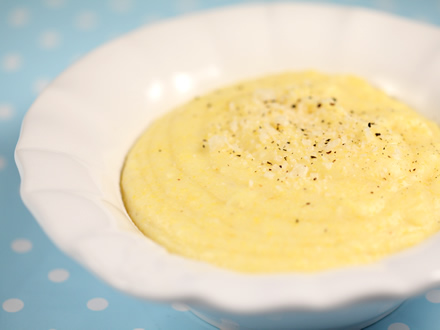
Italian cornmeal porridge, creamy like pudding. Polenta can be a side dish for rustic meals with sauce, but also for more elegant dishes. You can serve polenta Italian-style with this ossobuco alla milanese or Romanian-style with this pork stew. You can serve it with just a little gorgonzola on top (actually any good aged cheese works well) or mixed with a little mascarpone if you want it super creamy and fluffy. For an elegant meal, I would suggest duck confit, and for lacto-ovo-vegetarians it goes well with mushrooms or sautéed spinach and optionally a soft-boiled/fried egg.
Like any cornmeal porridge, polenta is best right when it's ready. However, if your guests are running late, don't panic - there's a solution for that too: you can keep the polenta over steam, and it will stay fresh (meaning soft and creamy) for up to 2 hours.
Ingredients
1 cup cornmeal
3 cups whole milk
2 cups water
1 1/2 teaspoons salt
1 tablespoon butter (optional)
3 level tablespoons grated parmesan (optional)
Servings: 3
How to prepare polenta
- Measure the cornmeal and liquids with the same cup to maintain a 1:5 ratio between them. Use a pot with a double or triple bottom, your best pot that distributes heat evenly. This way, the polenta won't stick to the bottom and you won't have to stir constantly.
- Put the water, cold milk and salt in a pot and add the cornmeal. Stir well to dissolve the flour in the water. Place the pot on the heat and bring to a boil, stirring constantly.
- When the liquid starts to boil, reduce the heat to low and let it simmer for 1 hour, uncovered. During this time, stir the polenta only occasionally. How often depends on the quality of your pot. Stir about every 10 minutes, but if you feel it sticking to the bottom, stir more frequently. Stir vigorously each time, scraping the entire bottom and sides so no areas remain unstirred where the polenta could burn or stick. The polenta will splatter during cooking, but to avoid dirtying your stovetop, you can use a splatter screen (see photo 1).
- After 1 hour, the polenta is thick, creamy, but soft enough to slowly flow off the spoon (see photo 2). If it's not like this, if the polenta is very stiff and sits firmly on the spoon (it also depends on the cornmeal used), don't hesitate to add a bit of hot milk and leave it on the heat a little longer. If on the contrary it's too soft, leave it on the heat until some liquid evaporates. In my case, with regular supermarket cornmeal, neither adjustment was necessary - the consistency was perfect with the 1:5 ratio.
- While the polenta is cooking, put a larger pot on the heat with water and bring it to a boil. This pot needs to be able to fit the pot in which you prepared the polenta.
- Remove the polenta from the heat, add the butter and parmesan if desired, and stir until melted. Adjust salt to taste.
- Reduce the heat under the large pot of boiling water to low, just enough to simmer gently. Place the pot with polenta on top of this pot (essentially keeping the polenta over steam). Cover the polenta with plastic wrap (I used a plastic roasting bag; its purpose is to prevent the polenta from forming a crust on top, just like vanilla pudding), then place a towel on the pot and the lid on top. Let the polenta rest over steam for at least 30 minutes. It can be kept over steam for up to 2 hours to stay soft at serving time.
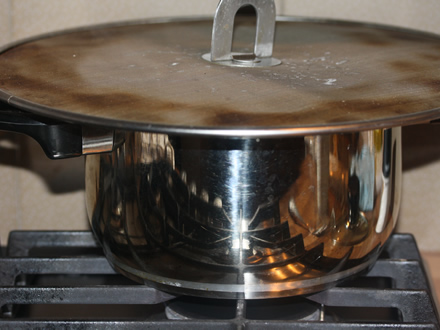
Pot with splatter screen
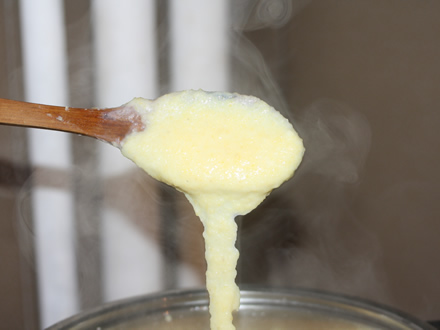
Final consistency after 1 hour
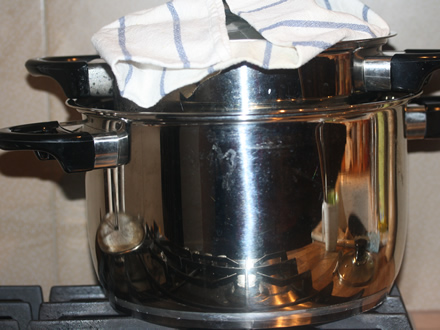
Polenta kept over steam
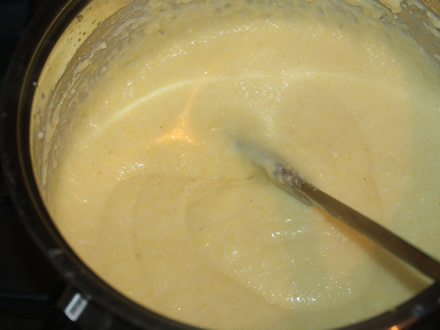
Polenta