How to Make Polenta (Mamaliga)
Fasting Recipes Budget Recipes Side Dishes Romanian
There's no better time for a good polenta than during fasting periods. Here you'll find my 30-minute recipe for a lump-free, well-cooked, soft polenta... exactly how I like it. I've always made good polenta, I've always been praised for it, but over time I've gradually modified the recipe and technique until I arrived at this convenient formula with consistent results.
Polenta is very healthy, it's a good bread substitute, especially for diabetics. It's rich in vitamins and fiber, protects the stomach and liver, builds muscle, reduces cholesterol, and is good for bronchitis and colds. We have every reason to eat it.
If you prefer firmer polenta made from mill-ground flour, find the recipe here.
Ingredients
1 cup coarse cornmeal (200g)
4 cups water (1,050ml)
1 teaspoon salt
Servings: 3
How to prepare how to make polenta (mamaliga)
- When making polenta, it's important to use a pot with a double/triple bottom or a cast iron pot to transfer heat slowly and evenly. So use the best pot you have. If you don't have such a pot, you can use a heat diffuser plate that goes on the stovetop burner, under the pot.
I've given exact quantities in grams and ml for cornmeal and water in the recipe, but I usually don't weigh - I use a classic milk mug and measure 1 measure of cornmeal and 4 measures of water. From these quantities, you'll get polenta for about 3 servings. - Put the cornmeal in a pot, add cold water and salt. Mix well to break up the cornmeal in the water.
- Place the pot over medium heat and stir slowly until the water starts to boil (when you see a few bubbles on the edge) and the cornmeal has absorbed the water. It will look like a super soft polenta that doesn't hold on the spoon. Until it reaches this point, don't stop stirring, otherwise you risk getting lumps. You don't need to stir quickly or forcefully, just pass the spoon at a slow pace over the entire surface of the pot. This process takes just over 5 minutes.
- Once the cornmeal has absorbed the water, turn the heat to low (I use the small burner on the stove). Cover the pot with a splatter screen if you have one (polenta splatters even when simmering slowly, so a splatter screen is ideal to protect your stove). Let the polenta cook like this for 20 minutes. About every 5 minutes (depending on the quality of the pot used), lift the screen and stir the polenta vigorously, focusing especially on the bottom and sides.
- Then put the lid on the pot and let it cook for another 5 minutes. Turn off the heat. Stir the polenta vigorously.
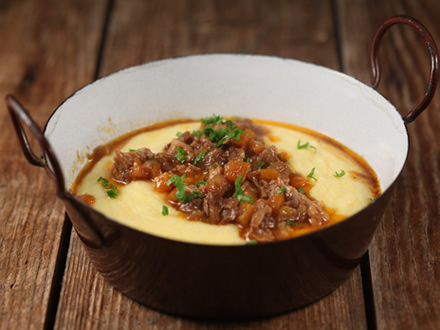
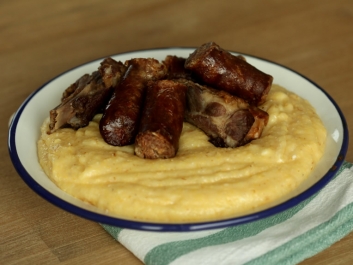
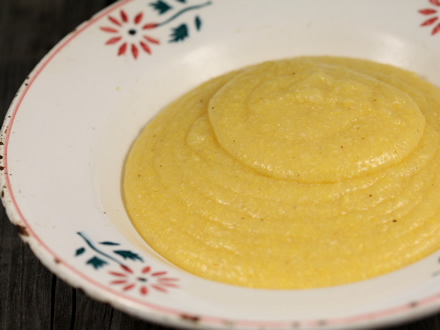
- Now the polenta is ready - it's a softer polenta that flows slowly off the spoon. It should be served immediately, otherwise it hardens. When I put it on plates, I do it like this: I take a spoonful of polenta and put it in the center of the plate, and each spoonful I add goes on top of it. Basically, you put the polenta in the same spot, and it will spread nicely toward the edge of the plate, forming waves (see main photo).
In case you're delayed with the meal for various reasons but your polenta is ready, there's a solution to keep the polenta soft for up to 1 hour. Take the pot with polenta, cover it with plastic wrap, then cover the pot with a towel and finally put the lid on. Place the pot prepared this way over steam (meaning on a larger pot containing boiling water; be careful that the pot on top doesn't touch the boiling water in the pot below).
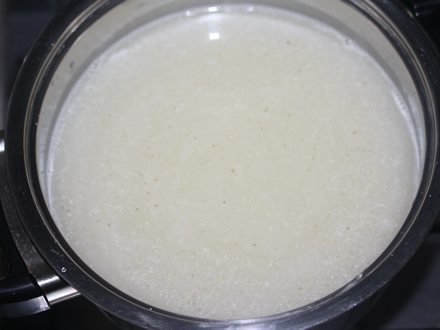
Cornmeal mixed with water and salt
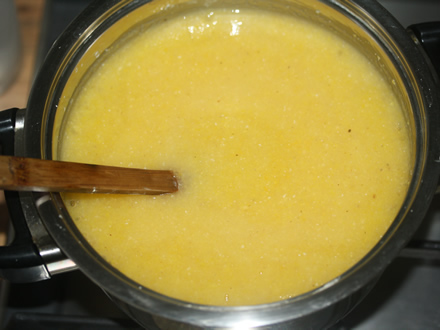
The cornmeal has absorbed the water and started to cook
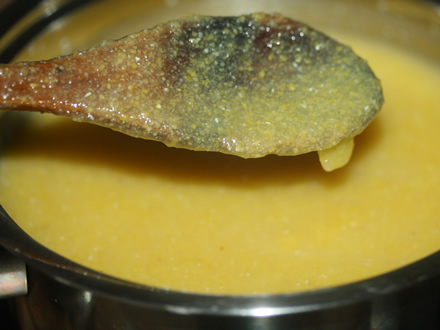
The consistency of the polenta when it starts to cook
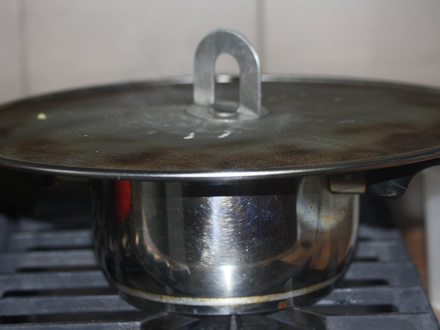
Put on a splatter screen and simmer for 20 minutes on low heat
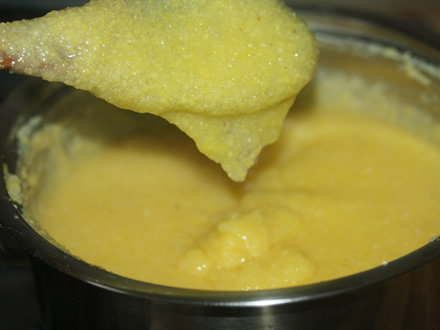
The consistency of the polenta after 20 minutes of cooking
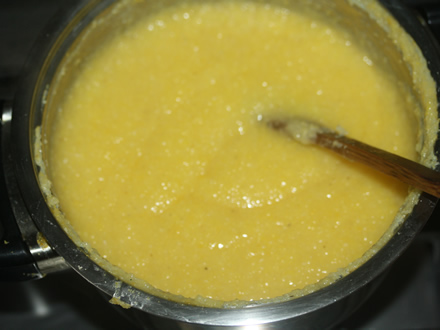
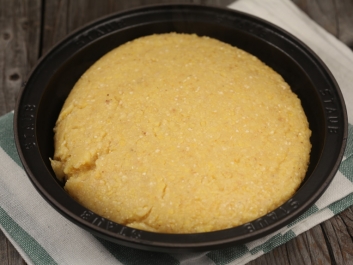
The finished polenta