Cheese Tart
Lacto-Ovo Vegetarian Recipes Desserts Cheese German and Austrian
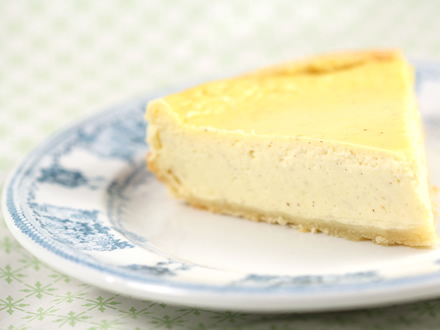
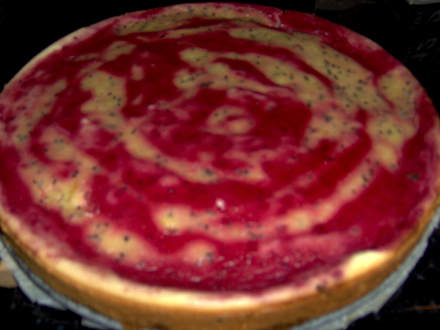
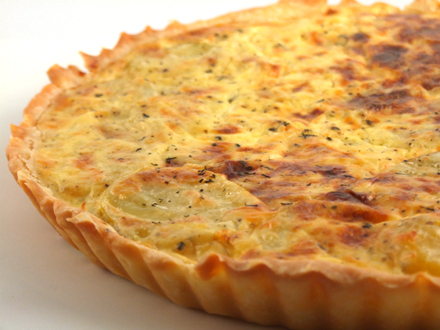
German cheese tart. The filling is much creamier than in American cheesecakes. The recipe is original, received from Sara, to whom I give thanks for being so kind to send it to me.
In Germany, they use "quark" cheese for this tart. Here, the closest thing to quark texture is creamy fresh cheese. I also tried quark cheese with yogurt (the only one I found), but I found it much too sour.
It is an excellent smooth tart, and you can now enrich it with any seasonal fruit sauce or simply with pieces of fresh fruit (start with strawberries, since we are in full season). If you are in a hurry, you can make a biscuit crust instead.
Note: I have only made half a portion, meaning I made the crust from 100g of flour and the filling from 250g of cheese; I used an 18 cm springform pan, so I cut the dough sheet to a 23 cm diameter.
Ingredients
Pâte Brisée
200g all-purpose flour
160g cold butter
1 egg yolk
5 tablespoons cold milk
Filling
500g creamy fresh cheese (or quark)
1 egg
2 egg yolks
60ml oil
100g sugar
2 packets vanilla sugar
1 packet vanilla pudding mix
200ml milk
200ml heavy whipping cream
How to prepare cheese tart
- Put the butter (cold, from the fridge) and the milk for the dough in the freezer for 10-15 minutes.
- For the dough, put the flour in a large bowl. Cut the butter into cubes and add on top. Using your hands, mix the flour with the butter (don't knead, just mix until the butter is covered with flour). Then take the butter between your fingers (your hands should be cold) and press gently to obtain butter flakes. You don't have to press all the butter, but do this for about 1 minute, until most of the butter is made into flakes. Add the egg yolk beaten with the milk and mix gently.
- Put the dough mixture on your work surface. With the heel of your palm, start pressing the mixture, pushing it forward. This maneuver is called "fraisage". It is a technique for mixing flour and butter without kneading, which results in a special texture for the pie dough.
- When you've finished all the dough, gather it into a mound, and you'll see it's still gritty. This means it needs another round of fraisage. Apply the fraisage technique again on all the dough. Gather it again into a mound, pressing with your hands (but without kneading!) and you'll see it comes together pretty well into a ball shape, although you'll feel it's slightly crumbly. That's okay.
- Flatten it with your hand into a disc and refrigerate for 30 minutes.
- Roll out the piece of dough on a floured surface into a rectangular sheet, not too thin. Fold it in three. Roll again and fold again in three. During these rollings, you'll see the dough isn't very pliable yet, it cracks at the edges, but it's okay, don't despair, with each rolling it will become easier to work with.
- Refrigerate the folded dough for another 30 minutes.
- Roll out the dough again into a not too thin rectangle. Fold in three. Roll again and fold again in three. Refrigerate until the oven is heated to 180°C.
- Roll out a 30 cm round sheet from the dough. I rolled out the sheet and cut the circle using a plate.
- Place the sheet in a tart pan or a round springform pan (26 cm diameter). Refrigerate the pan until the filling is ready.
- For the filling: mix all the ingredients with a mixer or a whisk. Start with the first two (cheese and egg) and then keep adding one ingredient at a time, mixing after each addition.
- Pour the filling into the pan, over the crust.
- Bake at 180°C for 40-45 minutes. Slice after cooling.
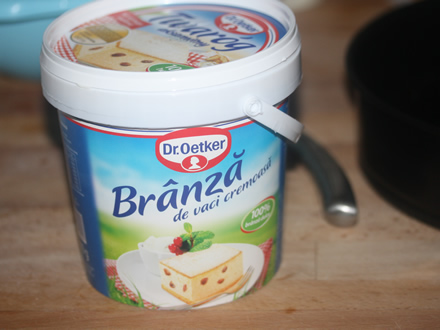
Creamy fresh cow cheese
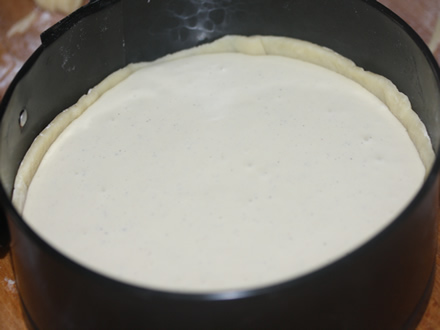
Into the pan
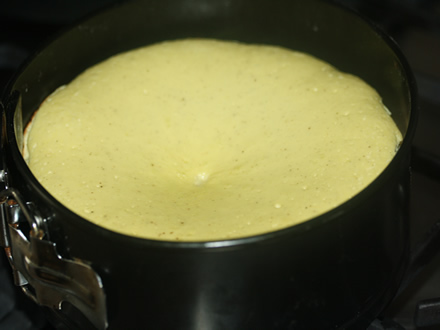
Bake tart
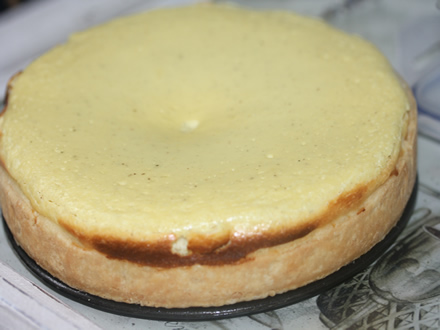
Cheese tart