


Turkish Flatbread (Pide Ekmek)
Dough Lacto-Ovo Vegetarian Recipes Budget Recipes Yogurt Turkish
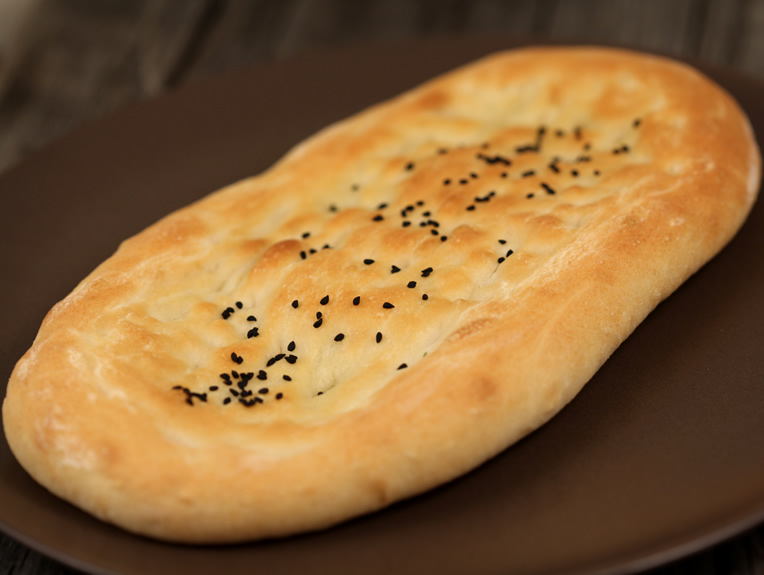
After a long time I made hand-kneaded bread. Because memories overwhelmed me. Adnana, who went out of her way to get me the recipe from her sister-in-law in Turkey, wrote to me that the dough should be kneaded until it has the consistency of "an earlobe." And so I remembered my first doughs, my first cozonac for which I kneaded for more than half an hour while constantly checking my earlobe 😊 Today I am ok, I feel good, my hand is in place, technology has not "softened" me completely 😋
As for this bread, I had an ambition. After eating pide in Paris, I rediscovered it last year in Bodrum. I liked its light texture and slightly chewy crumb each time, soft but not fluffy... you feel it is real bread when you bite into it. That is why it is very good served with muhammara, eggplant salad or hummus. I tried so many times to make pide ekmek, but the crumb was always too fluffy, very far from the pide in Turkey. This time, however, I got very close to the desired texture, I would say about... 85%. I am satisfied and from now on I know it will get better and better.
Ingredients
350 g all-purpose flour (type 550 or 650)
120 g full-fat yogurt (7%)
150 ml lukewarm water
7 g dry yeast
1/4 teaspoon sugar
1 teaspoon salt
1 tablespoon oil
nigella and sesame seeds (for decoration)
a little oil for shaping and brushing
Pieces: 3
How to prepare turkish flatbread (pide ekmek)
- Dissolve the yeast and sugar in 50 ml water. Cover and leave in a warm place for 10-15 minutes, until it becomes foamy.
- Put the flour mixed with salt in a bowl and make a well in the middle. Add the activated yeast and yogurt there. With your hand, slowly start pulling the flour toward the center, mixing in circles. Gradually start adding the remaining water and continue to mix concentrically until you pull all the flour into the liquid. When you have a cohesive dough, start kneading, but first oil your hands with a tablespoon of oil.
- Knead by hand for 35 minutes, with small breaks during which you pick up the dough and slap it on the counter 5-6 times. You will get a very elastic dough, but not sticky at all.
- Put the dough in a bowl lightly oiled, put it in a plastic bag and let it rise in a warm place (26-28C) for 1.5 hours.
- Cut the dough into 3 equal pieces. Lightly knead them and shape them into rounds.
- On a lightly floured surface, roll each piece into a disc about 15-16 cm. Oil your hands lightly. Place both hands on the top of the sheet and with your fingertips push the dough upward. Move your fingers down and push up again. It is basically like giving the dough a massage 😊 Leave a 1 cm edge untouched. Your fingertips will leave small indentations in the dough. After you have "massaged" the whole sheet, rotate it 90 degrees and repeat the "massage."
- Grab the sheet by the sides and lift it. It will stretch under its own weight, taking an oval shape. Place it on the tray.
- After you have finished all the sheets, you can brush them with beaten egg mixed with a little milk or with a bit more oil (I used oil). Sprinkle the breads with nigella seeds and/or sesame seeds.
- Bake the breads at 240C for 10 minutes (until nicely golden on top). If you want a softer crust, you can cover them with a towel immediately after removing them from the oven.
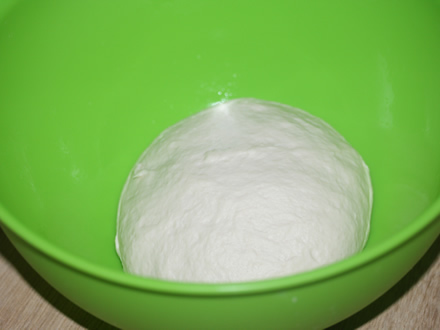
The dough
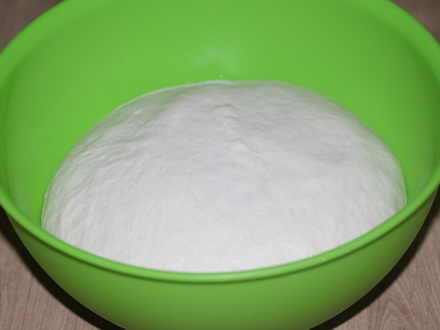
Risen dough
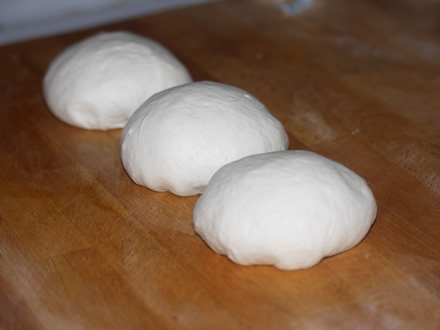
Dough cut into pieces
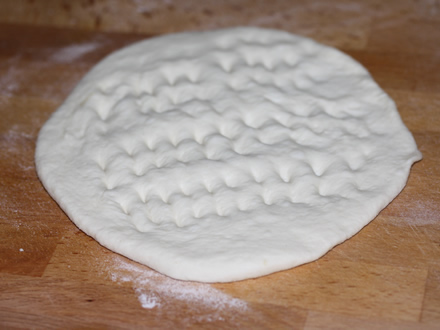
Shaping the bread
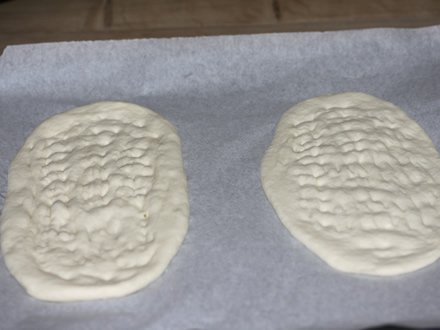
Breads on the tray
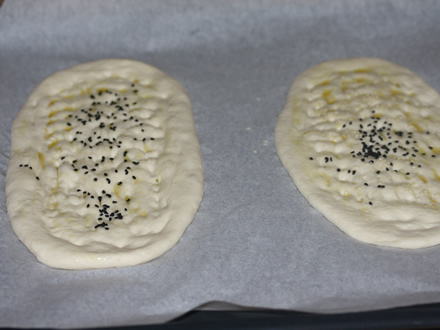
Decorated breads