French Bread (Pain de Campagne)
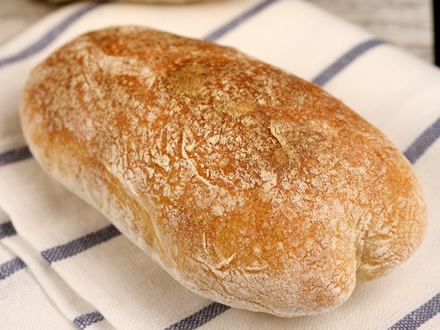
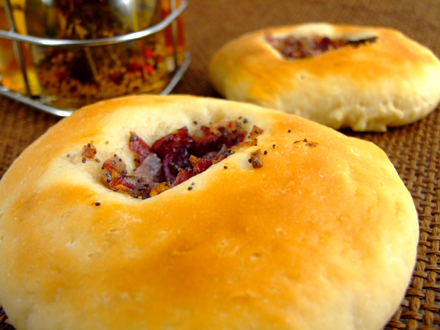
The lesser-known cousin of the famous ciabatta. A bread with large holes inside and a slightly chewy crust and crumb. I made only 2 small rolls from half the dough, and tomorrow I'll show you what I did with the rest.
Ingredients
500 g all-purpose flour
375 ml water
25 g fresh yeast
1 teaspoon sugar
1 1/2 teaspoons salt
How to prepare french bread (pain de campagne)
- Knead the flour with 325 ml cold water well until you get a non-sticky dough. Cover the dough with plastic wrap touching it directly (so it doesn't dry out on top) and refrigerate for 1 day.
* This step serves two purposes: the flour hydrates overnight, thus strengthening the gluten, and the bubbles that will develop the next day when we add the yeast will be better retained inside; this gives us a crumb with large holes; the second reason is the formation of sugars in the dough, resulting in a substantial crust with a golden-brown color - The next day, add the remaining 50 ml warm water in which you've dissolved the yeast and sugar to the dough. Add the salt as well. Knead (mandatory by hand, as a machine won't absorb the water) until the water is completely absorbed into the dough. It will seem impossible at first, but slowly you'll see the water being absorbed. After that, I also kneaded the dough with a machine to make sure it was well mixed. The dough will be softer, a bit sticky, but that's okay.
- Let the dough rise for 1 hour; during this time it will also come to room temperature.
- Sprinkle flour on the work surface and stretch the dough with floured hands into a rectangle shape. Fold it in thirds lengthwise, then in thirds again from the opposite direction (see photos 3 and 4 below). Place the folded dough in a spacious container greased with oil and let rise, covered with a towel, for another hour.
- Sprinkle flour on the work surface again and repeat the folding operation one more time. Work gently with the dough while stretching to avoid releasing too many air bubbles. Put the dough back in the oiled container, cover, and let rise for another 2 hours.
* The two stretching and folding operations give the dough elasticity, so in the end it will be very easy to shape or roll out (if for example you're making pizza from it) without losing all the bubbles; additionally, the dough temperature equalizes and it will ferment uniformly inside, so the holes in the crumb will be evenly distributed - Place the risen dough on the work surface and cut it into 2 or 4 pieces. If you cut it into 4, you'll get rolls perfect for sandwiches. If you want a larger loaf, you can leave it whole. Working very gently with the dough to avoid deflating it, shape the dough pieces by tucking the edges underneath. Let the formed rolls rest for 30 minutes on parchment paper sprinkled with a little flour.
- Meanwhile, preheat the oven to 240°C and leave the baking tray you'll use inside to heat up. Also place a small pot of water on the lowest level to create steam in the oven.
- Carefully remove the hot tray from the oven, being careful not to burn yourself. Slide the parchment paper with the rolls onto the tray and immediately put it back in the oven for about 20-25 minutes, until nicely golden on top.
* The baking time is for dough divided into 4 pieces - Let cool before serving.
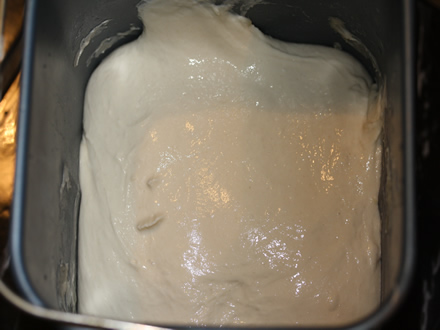
The dough
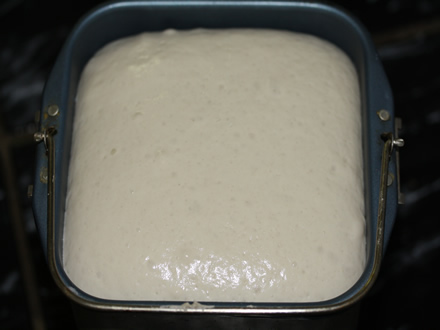
Dough after first rise
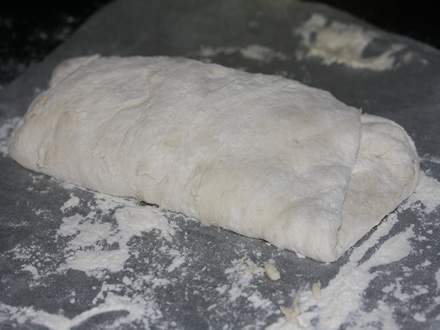
Folding the dough
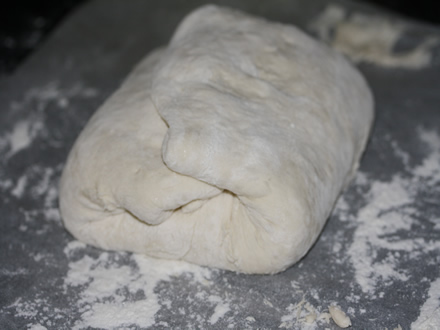
Folding the dough
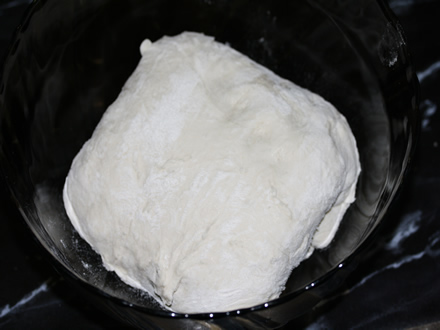
Folded dough rising
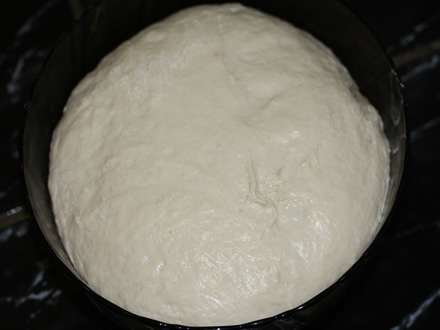
Dough after second rise
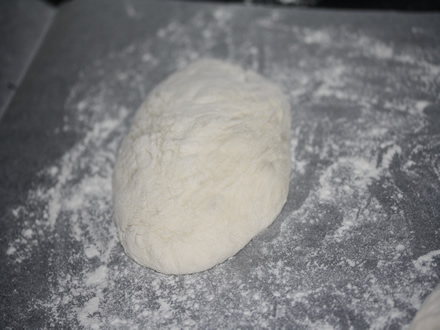
Shaping the rolls
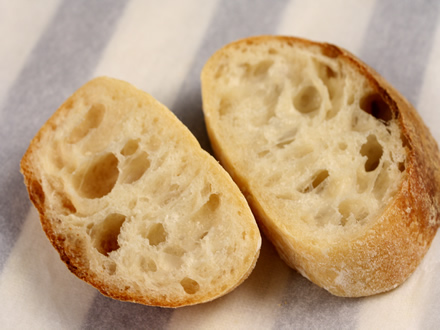
French Bread (Pain de Campagne)