Oven-Baked Onions
Condiments Budget Recipes Vegetables Oven Recipes
My sense of smell is the first to react to the contents of a plate or a pan. Have you tried taking a sip of wine or coffee while holding your nose? If you try it, you'll notice you can barely taste what you're drinking. When cooking, smell is important. That's why kitchen smells don't bother me at all. I don't even have a range hood in my new kitchen. However, I do mind when the smell of food gets into my skin or hair. Of all smells, sautéed onion seems to stick to me the most. Many times I've given up making a Spanish tomato sauce, postponed preparing my onion paste for Indian dishes, or delayed making pissaladière for guests because of this.
To sauté onions until they become soft, even caramelized, takes me at least 45 minutes on low heat with frequent stirring. And the smell has time to stick to me... So one day, I put the pot with onions, a little oil, and salt in the oven and left it there for about 1 hour, stirring only once. When I took it out, I had the softest, sweetest onions I've ever made—better than anything I've achieved on the stovetop. And in the kitchen, you could barely smell them...
Ingredients
800 g onion
3-4 tablespoons oil
salt, black pepper, chili, oregano
How to prepare oven-baked onions
- Preheat the oven to 200°C.
- In a wide pot (I prefer a cast iron pot approximately 25-30 cm in diameter), add the oil, onion cut into strips or scales (whichever is more convenient for you), and sprinkle with salt. Stir to separate the onion rings.
* the amount of onion you cook isn't very important; what matters is having a generous layer of onion in the pot at the start, because if there's too little relative to the pot size, it will burn; so if you're preparing a smaller amount of onion, use a smaller pot - While the oven heats up, place the pot on the stove and sauté (about 5 minutes), just until the onion loses some volume and settles better in the pot.
- Cover the pot with a lid or foil (as airtight as possible) and place in the oven. Leave it there for about 1 hour and 15 minutes, stirring after 25-30 minutes. After stirring, make sure to level the onion layer so it's even and doesn't burn on the edges.
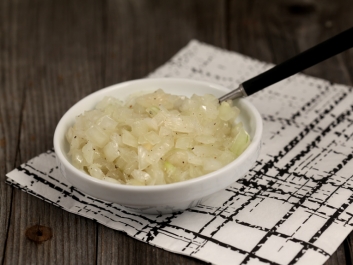
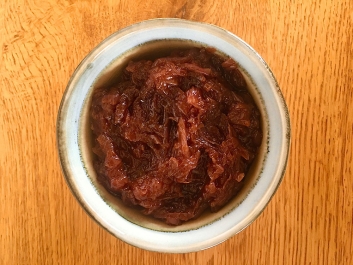
* the cooking time is also approximate, as it depends on the pot material and the amount of onion in it (for example, 500 g onion in a slightly smaller ceramic pot was ready in 45 minutes); the important thing is to leave the onion until it turns pale yellow as shown in the photo and taste it; at some point if you peek into the pot, the onion may look just boiled—that's okay, it's cooking in its own juices; after a while it will start to change color slightly and caramelize; only remove the onion when it's so soft that it almost dissolves in your mouth; also, it's important to stir about 25 minutes after putting it in to see how it's doing and ensure an even layer in the pot - You can remove the onion from the oven now or leave it longer to caramelize, depending on what you want to do with it next. For Pissaladière, for example, you can use it as is, since it will caramelize more on the crust. If you want to make Spanish sauce or onion paste, you can caramelize it more. To caramelize, remove the lid and leave at 200°C for another 15 minutes, stirring 2-3 times during this period. Stop when it reaches the desired color, about the color of cognac.
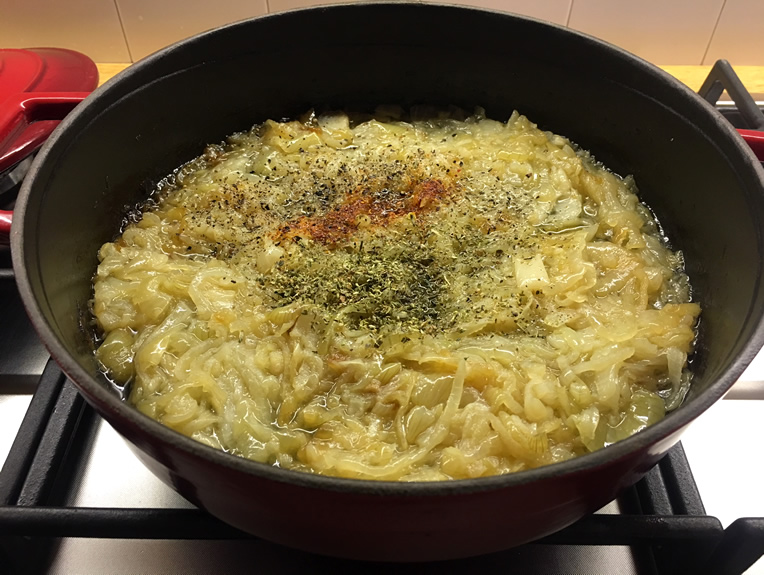
- After removing from the oven, the onion can be seasoned. This time I added salt to taste, ground plenty of black pepper, 1/4 teaspoon chili flakes, and 1 heaping teaspoon oregano.
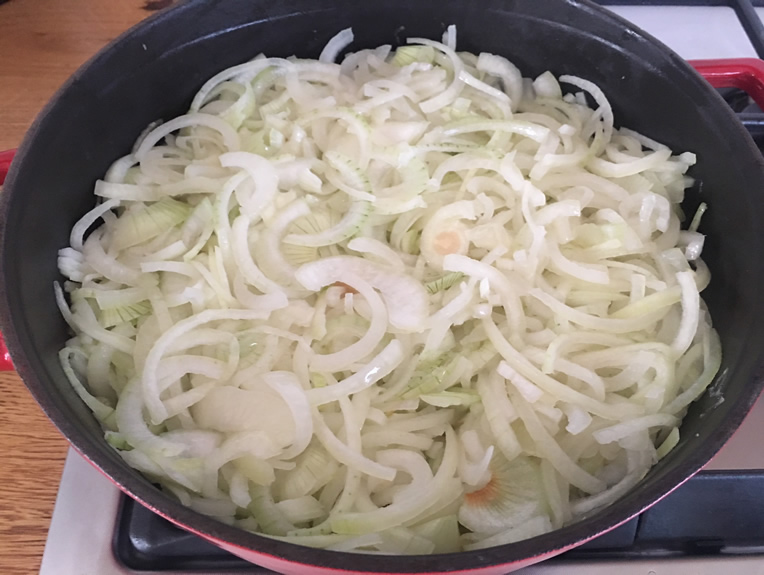
The onions go into the oven...
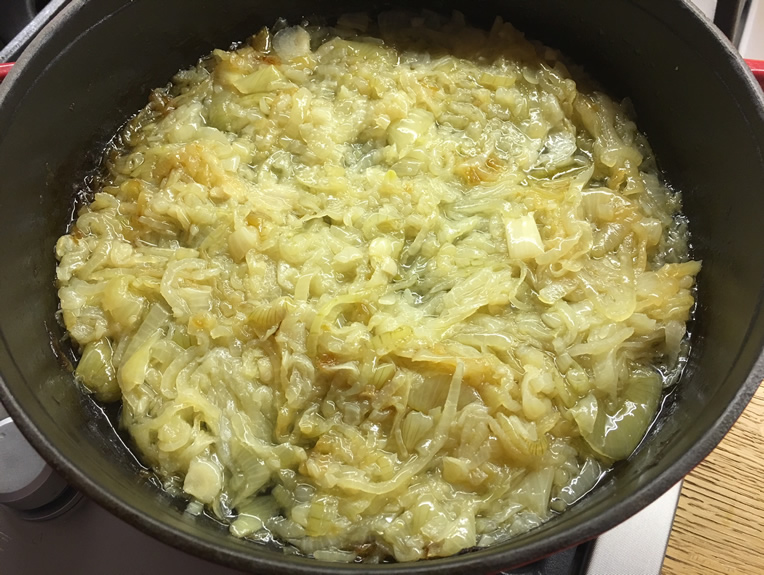
... and come out like this