Sandwich Bread
Dough Lacto-Ovo Vegetarian Recipes
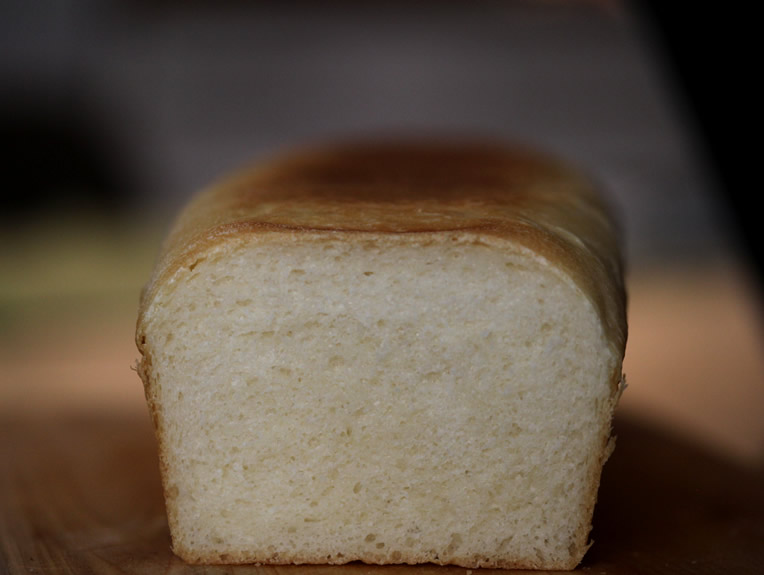
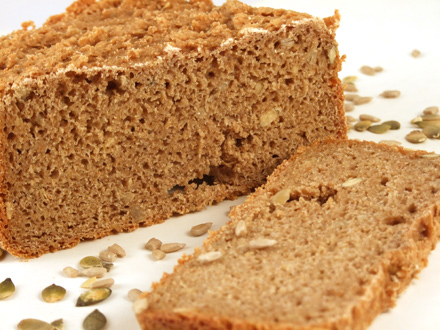
Soft bread for sandwiches. Super white bread, super fluffy, super delicious. The crust is thin and soft. It's ideal for fresh sandwiches or toast. This time of year it goes perfectly with butter and radishes. It's very good on the day it's baked and the next day too.
Ingredients
450g all-purpose flour (BL55)
150ml milk
150ml water
1/2 packet dry yeast (about 4g; or 15g fresh yeast)
1 pinch sugar
1 teaspoon salt
30g butter (at room temperature)
Yield: 1 loaf of 650g
How to prepare sandwich bread
- Gently warm the water and milk together, just until lukewarm. Take 2 tablespoons of this mixture into a small cup and dissolve the salt in it. Separately, take about 50 ml (measured by eye, doesn't need to be exact) into a cup and add the yeast and sugar. Leave in a warm place just until it forms some foam on top (about 10 minutes).
- Put the flour in a bowl and make a crater in the center. Add the activated yeast and the rest of the milk+water there. Knead until you have a smooth dough (10 minutes by hand or 5 minutes with a mixer). Let the dough rest for 10 minutes.
- Then continue kneading (by hand or with mixer), gradually adding cubes of butter (in 4 batches) and also adding some of the salted milk. After each batch, knead until the dough becomes smooth again, because it will seem like the dough is separating, but you need to persist until it returns to normal consistency (especially if kneading by hand). After you finish incorporating the butter and salt, continue to knead the dough (another 10 minutes by hand or 5 with mixer). Let the dough rest for another 10 minutes.
- Knead the dough one more round (another 10 minutes by hand or 5 with mixer). You'll get a non-sticky but super elastic dough (that's how you know you've kneaded enough).
* don't skip the kneading and resting stages because these steps give the crumb its texture; if you don't do them properly the crumb will turn out fluffy and tasty, but will be slightly crumbly. - Place the dough in a bowl, cover with a towel or plastic wrap and let it rise in a warm place until it doubles in volume (about 1 hour at 28°C).
- Take the dough out of the bowl, stretch it a bit with your hand on the work surface and fold it in half, then again in half from the opposite side. Place the dough back in the bowl and let it rise again until it doubles in volume (about 1 hour at 28°C).
- Put a little flour on the work surface and stretch the dough with your hand into a rectangular sheet, making sure one side has the length of the pan you'll use for baking. Roll the dough on that side, then place it in the pan (L 30 x W 11 x H 8 cm) greased with a little oil or butter.
- Cover the pan and let the dough rise in a warm place until the pan is almost full (about 30-40 minutes).
- Grease a piece of parchment paper with oil and place it over the pan, greased side down. Put a weight on top (I used a baking tray), to ensure the bread doesn't form a "hump".
- Bake the bread at 190°C for 20 minutes, then increase the temperature to 220°C and bake for another 10 minutes to brown a little.
- Let the bread cool in the pan covered with a towel.
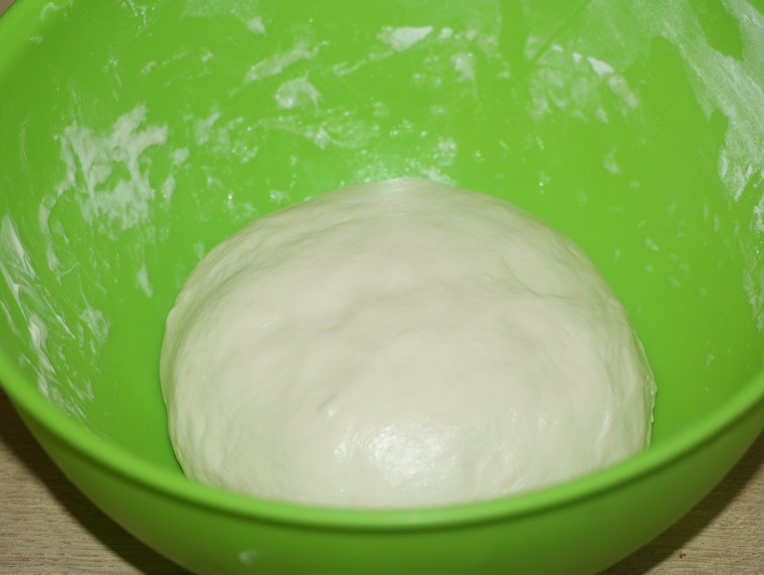
The kneaded dough
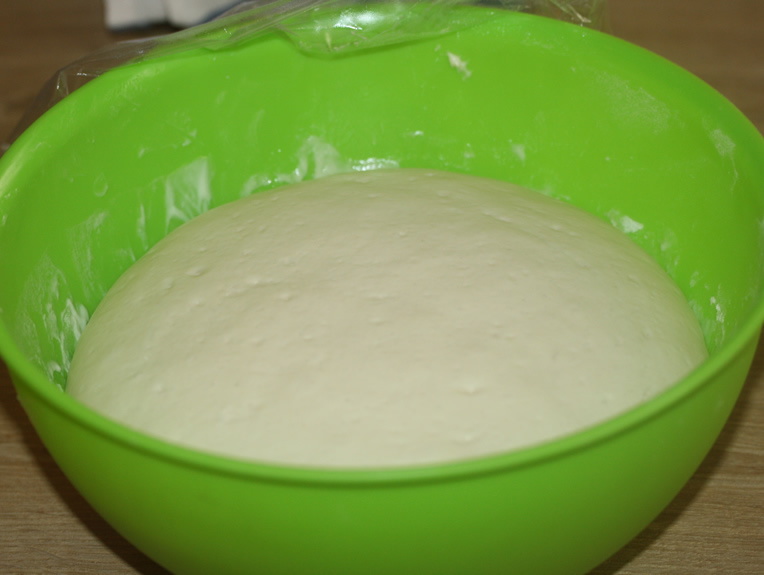
The dough after first rise
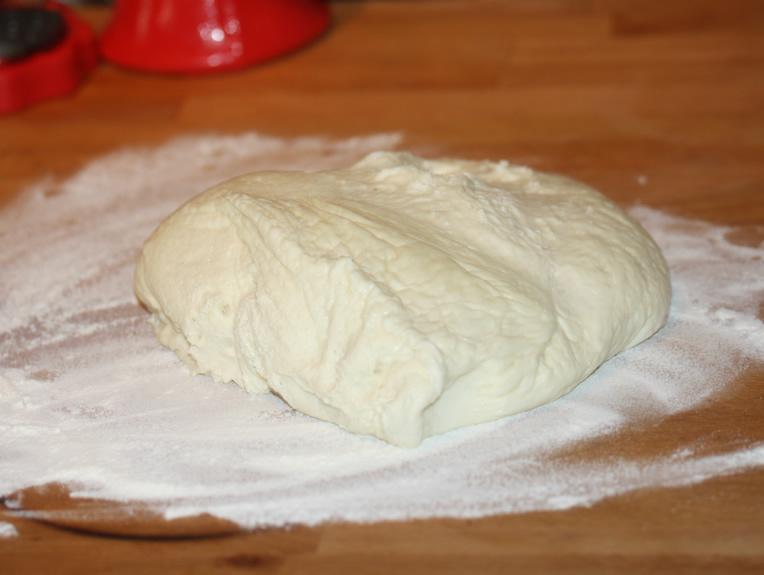
The dough on the work surface
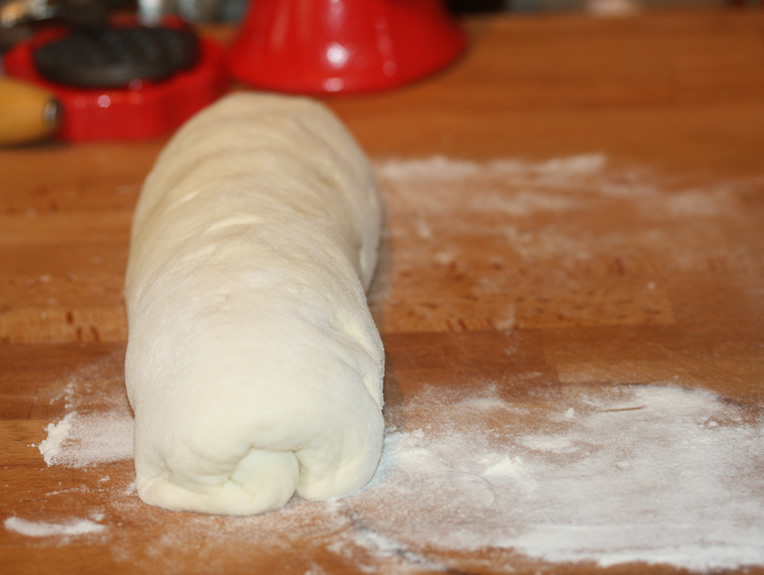
The rolled dough
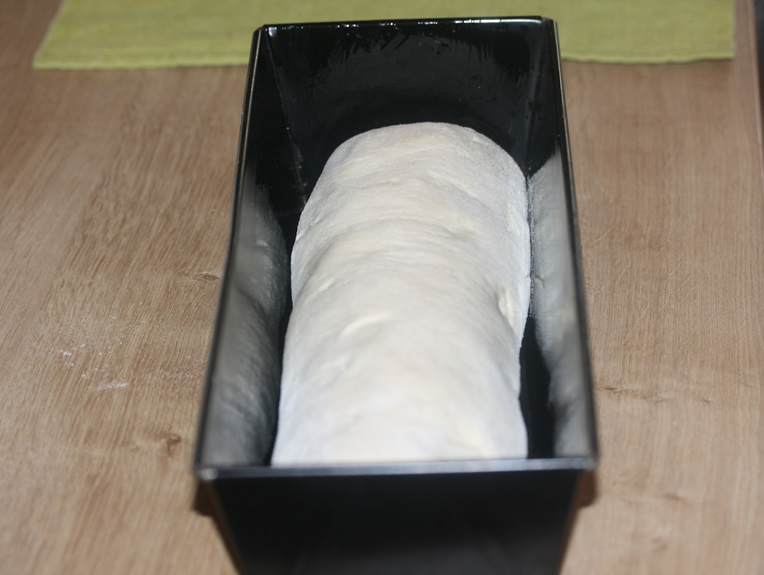
In the pan
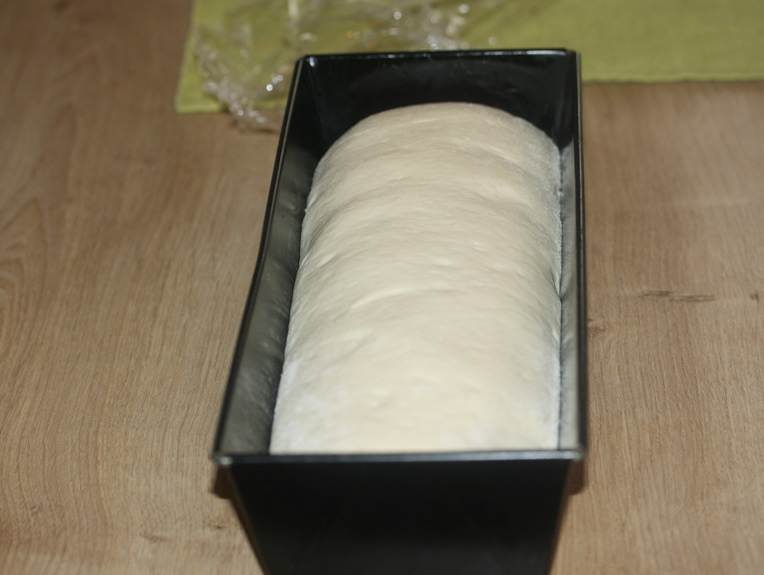
After rising
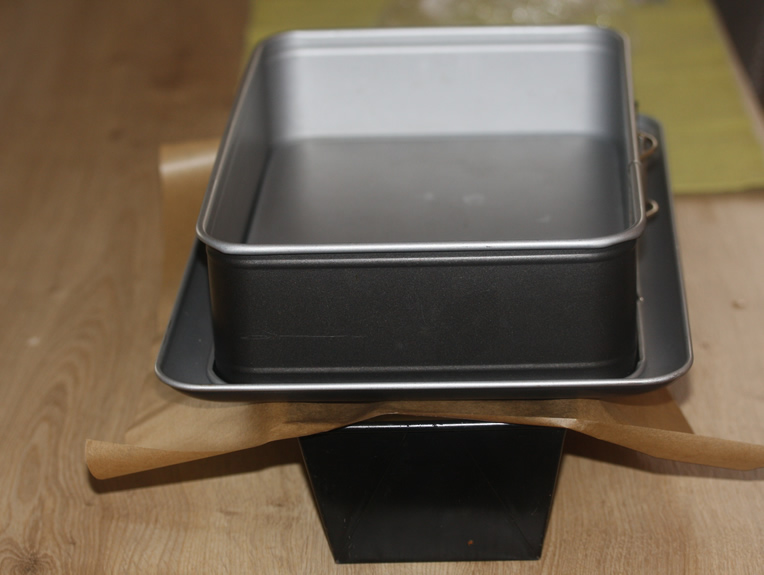
With parchment paper and weight on top