Seeded Bread
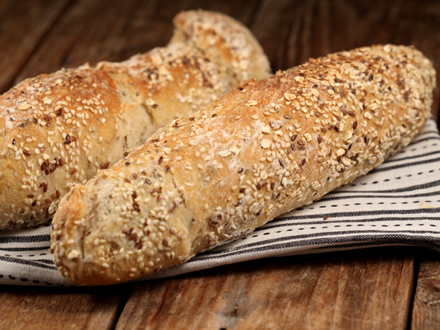
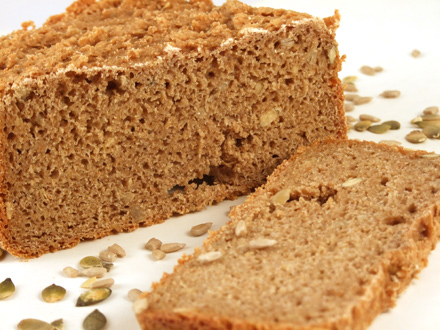
Rustic bread with flax seeds, sesame, and oat flakes. Nothing is more pleasant in winter than the smell of fresh bread spreading throughout the house. It has an incredible taste, is fluffy, with large holes, and stays fresh for 3 days.
Schedule your bread to fit your schedule, so it's easy to follow the steps. The actual working time is short, especially if you have a kneading machine, but the successive folding and rising require a bit of organization. I put the starter on Friday evening at 9 and started working the dough on Saturday morning at 9. By noon, I had fresh bread in the oven.
Ingredients
Starter
100g all-purpose flour (type 550 or 650)
100ml water at room temperature
a pinch of dry yeast
Dough
365g all-purpose flour (type 550 or 650)
65g whole wheat flour
300ml cold water
3g dry yeast
1 heaping teaspoon salt
30g flax seeds
Topping
sesame seeds
flax seeds
oat flakes
How to prepare seeded bread
- On the first day, mix the starter ingredients just until you have a smooth dough. You can mix them with a spoon or a mixer. Cover the bowl with plastic wrap and leave the dough at room temperature (20-21°C) for 12 hours. The next day, the starter should have risen a bit and have many small bubbles on top (photo 2).
- The next day, add the remaining yeast, 250ml water, white flour, whole wheat flour, and salt to the starter. Knead the dough until it becomes elastic (at least 15 minutes by hand; or put it through one cycle in a bread machine on the kneading program; or knead with a mixer for 7 minutes). You'll get a pleasant, non-sticky, elastic dough.
- Add the remaining water and knead again as above (by hand, with a bread machine, or mixer). You'll get a soft, slightly sticky but veeery elastic dough when you stretch it.
- Now add the flax seeds and knead just until they're evenly incorporated throughout the dough.
- Place the dough in an oiled bowl. Cover the bowl with plastic wrap and let it rise at room temperature for 1.5 hours.
- Dust the work surface generously with flour. Turn the dough out onto the work surface and stretch it with your hands as follows: start from the middle, press with your fingers, then gently pull the edges. Fold the dough in thirds toward the center and then again in thirds from the opposite side (photos 9 and 10).
- Put the dough back in the oiled bowl (clean it if necessary, or use another clean bowl) with the folded side down. You'll feel that the dough is very fluffy; when you move the bowl, it jiggles like jelly. That's how it should be - it means it's full of air bubbles. Always handle the dough gently without stretching or pressing too hard, so you don't push the bubbles out... kind of like handling a baby 😉 Cover the bowl with plastic wrap and let it rise at room temperature for 1 hour.
- Repeat the folding one more time on the generously floured surface and put the dough back in the bowl. Cover and let it rise for another hour. With each folding and rising, you'll see the dough becoming less sticky.
- Sprinkle a thinner layer of flour on the work surface. Then sprinkle sesame seeds, flax seeds, and oat flakes all over. Turn the dough out onto this bed of seeds. Stretch the dough with your hands, pulling the edges and pressing with your fingers in the center (to get a square about 25 x 25cm).
- Cut the dough into 2 or 3 pieces using a dough scraper. Sprinkle the pieces with seeds. Press gently with your palm so the seeds stick. Take each piece and twist it as if wringing a towel (3-4 times). Place the formed bread on a baking tray with parchment paper.
- Put the tray with the loaves in a plastic bag and let them rise for 60 minutes.
- Preheat the oven to 220°C. Place a pot of water in the oven on the lowest level to create steam.
- Bake the loaves at 220°C for 25-30 minutes, until golden. If you want a crispier crust, remove the pot of water after 15 minutes of baking; if you want a softer crust, leave the pot in the oven until the end.
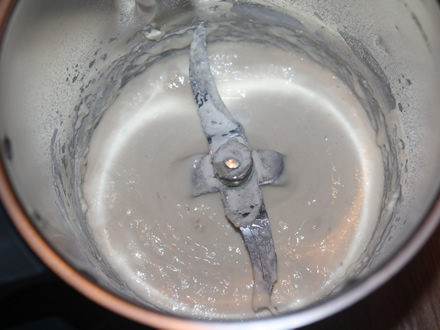
The starter
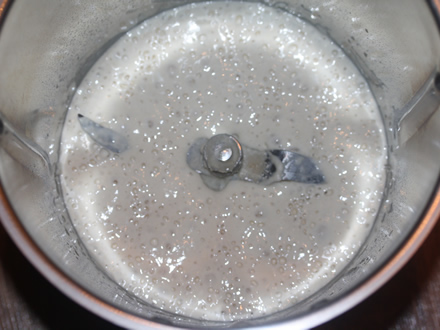
Starter the next day
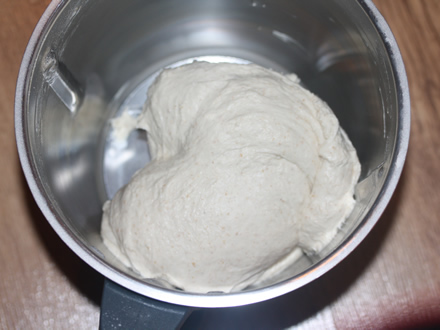
Dough kneaded first time
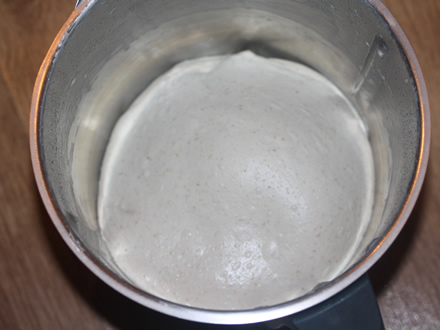
Dough kneaded second time (with water)
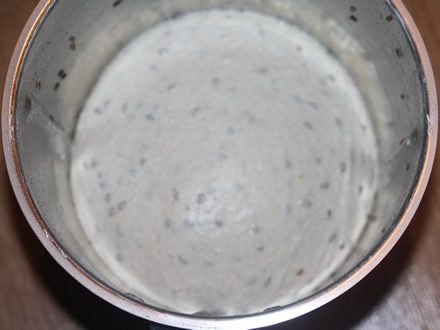
Dough kneaded with seeds
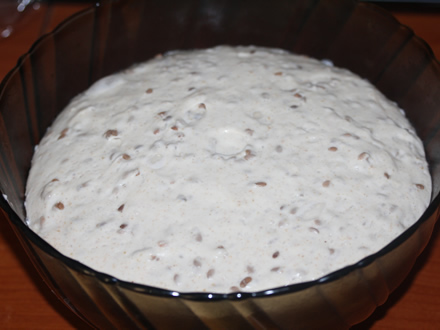
Dough risen first time
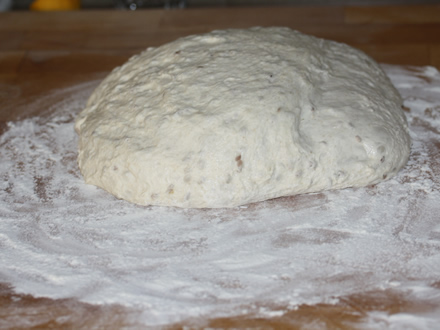
Risen dough turned onto heavily floured surface
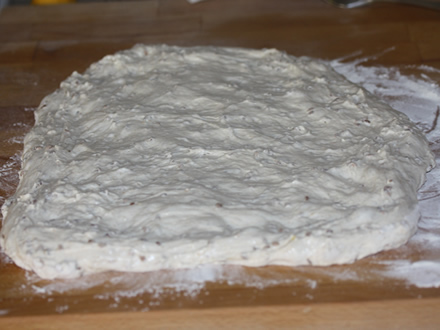
Dough stretched by hand
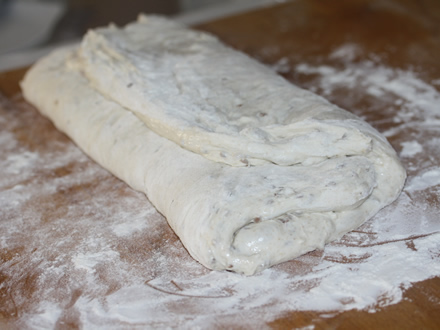
Dough folded in thirds
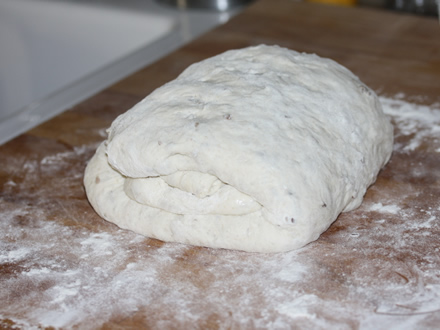
Folded again in thirds from opposite side
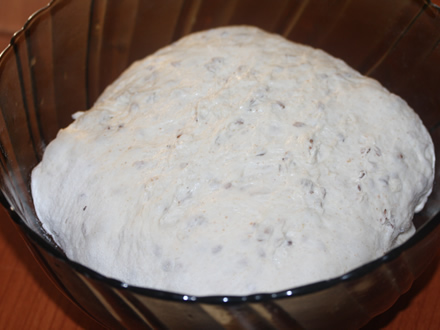
Folded dough rising
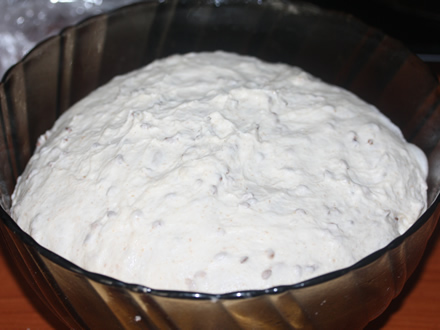
Dough risen at the end
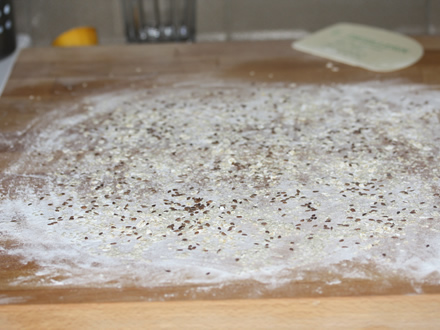
Work surface sprinkled with flour and seeds
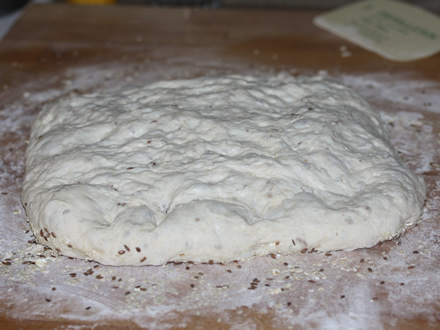
Dough turned onto seeds and gently stretched
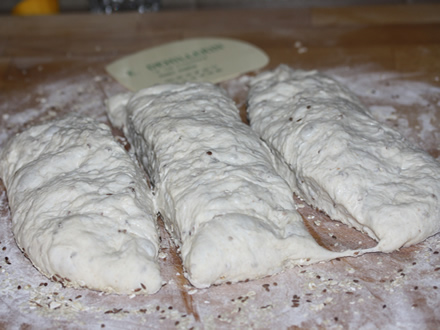
Dough cut into three pieces
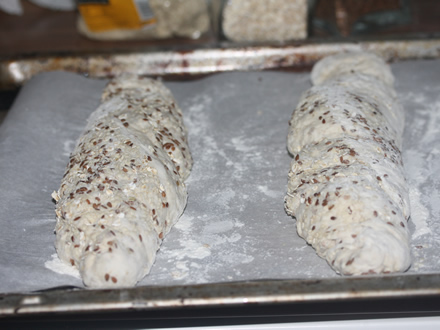
Formed loaves on baking tray
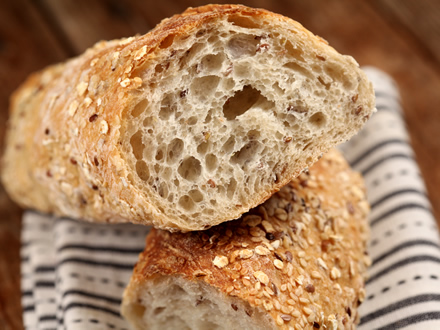
Seeded Bread
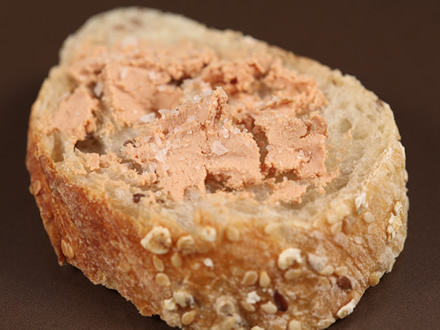
Seeded bread with duck pâté and fleur de sel