Rhubarb, Spring's Optimist
When I met with Cori on Friday, she confessed that she wasn't familiar with rhubarb and had been hesitant to use it. And I realized that's normal - many times when I go shopping, I'm tempted to choose vegetables and fruits that I know and like to eat rather than those I haven't encountered before. Instinctively, it's harder for me to decide to try something new... I risk not liking it, I risk not cooking it well on the first try, I risk money and time. And yet, most times when I've taken the risk, it turned out well and I was delighted with the results and new discoveries. Or at least I let go of an obsession... I wonder what this tastes like?
I wanted to describe the taste of rhubarb and I realized I don't know exactly how to explain its flavor - it doesn't seem to resemble anything else. However, I could tell her it's tangy. To me, it seems to have the same acidity as sorrel. While I prefer sorrel in soups and salads, rhubarb is great in desserts because it needs to be sweetened to "shine."
Its season begins in April (greenhouse grown) and May-June (garden grown).
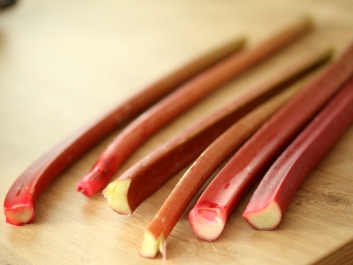
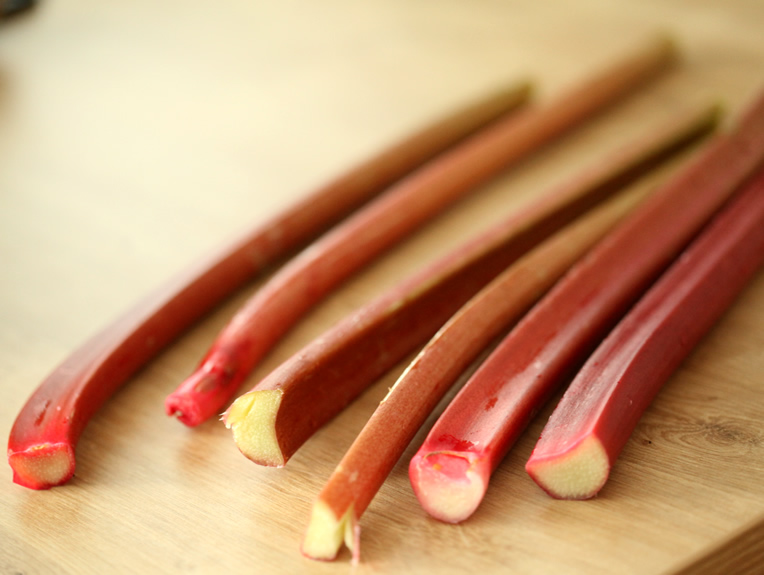
Usage: only the stalks of rhubarb are used. Note that the leaves must be removed because they are toxic.
The stalks can be green or colored in pink-fuchsia to deeper red. If the stalks are green, it doesn't mean it's not ripe - some varieties simply are that way and stay that way, possibly getting a hint of pink at the end. Usually the green varieties are garden-grown, while the red ones are greenhouse-grown. Greenhouse rhubarb is more delicate. Garden rhubarb can become stringy when not young (you can see tough fibers when you cut it into pieces), in which case just peel the surface with a vegetable peeler (just like peeling cucumbers).
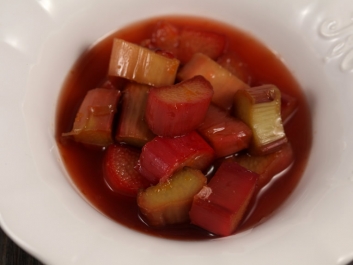
The stalks are simply cut into pieces and used in recipes. When cooked, rhubarb tends to lose its shape and falls apart very easily. Because it loses its shape so easily, it's preferred for jams, tarts, and pies. The best method I've tried so far that best preserves rhubarb's shape is roasting in the oven, at medium heat and being careful not to stir it at the end.
Storage: it keeps well short-term in the refrigerator drawer; for long-term storage it can be frozen (my mother-in-law does this: she cuts it into pieces, puts it in zip-lock bags, removing as much air as possible and seals the bag; she puts it in the freezer; when thawed it softens; this year I will freeze a few bags of rhubarb myself for the first time).
Combinations: with strawberries, raspberries, apples, ginger, cardamom, oranges, lemons, vanilla, cinnamon, sugar or honey, sour cream, yogurt.
My rhubarb recipes:
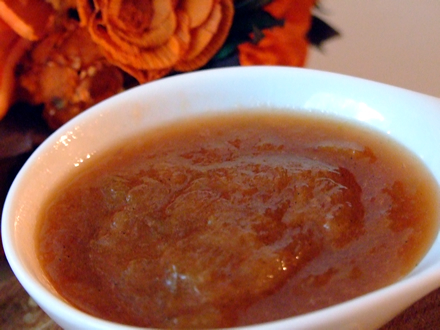
- Rhubarb jam
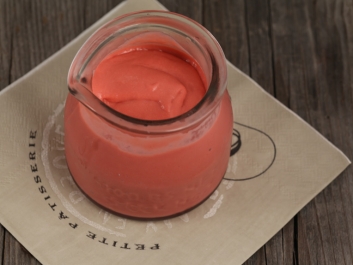
- Rhubarb curd
- Cookies with rhubarb curd
- Rhubarb sorbet
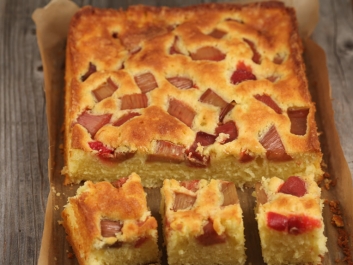
- Rhubarb cake
- English rhubarb pie
- Rhubarb roasted in Earl Grey syrup
- Rhubarb scones
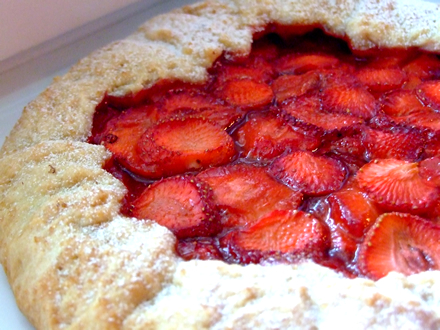
- Crostata with rhubarb and strawberry jam
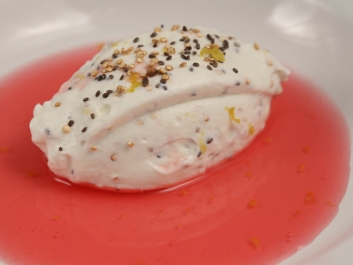
- Rhubarb syrup with yogurt mousse
In these recipes I've tried many of the combinations I mentioned. Try them and see which one you like best.